


 How many people today grab a takeaway coffee cup from the local cafe to drink on the go? We don’t know, but the number must be enormous.. Most every one of the above have a plastic top that will last 100s of years. Some cafes still use plastic cups that last a similar time. Is 10 minutes of coffee worth 100s of years of trash?
These items can be seen littering our gutters and on our streets all over the place. If they were all cardboard, they would still be littered, but they would, at least, be gone in a short time.
They do not need to be made of plastic.
How many people today grab a takeaway coffee cup from the local cafe to drink on the go? We don’t know, but the number must be enormous.. Most every one of the above have a plastic top that will last 100s of years. Some cafes still use plastic cups that last a similar time. Is 10 minutes of coffee worth 100s of years of trash?
These items can be seen littering our gutters and on our streets all over the place. If they were all cardboard, they would still be littered, but they would, at least, be gone in a short time.
They do not need to be made of plastic.
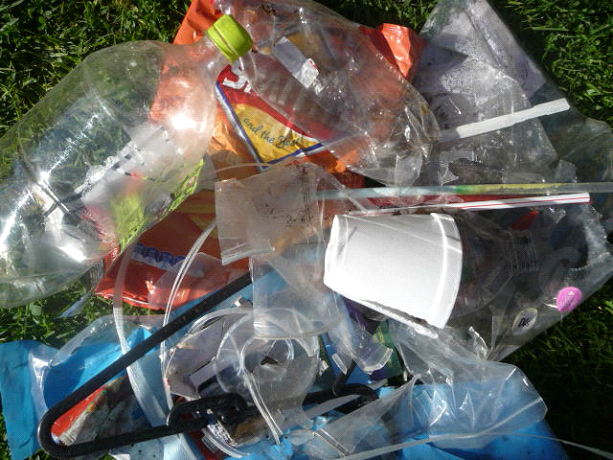 On the way home from the gym last week, a distance of about 1 km (1/2 mile), I counted the items of plastic litter on the curb as I walked. In that short distance I counted 63 pieces of plastic litter. Plastic drink bottles, bottle tops, candy wrappers, plastic film, polystyrene fragments etc. That seemed to be a lot to me. I guess it is a generational thing. Our parents would have been horrified to see that amount, whereas it seems to go unnoticed by our youth of today. In another 20 years how many pieces will there be on this stretch, -- 200? What will today’s youth think of that new amount then when they are older? Will their children be so readily accepting of a higher amount of litter?
 June 2016 - Page 2 of 2 - Plastic Waste Solutions
-

State Senate approves bill to block NYC’s plastic bag tax
Posted on June 9, 2016 by DrRossH in General, Plastic Limiting RegulationsNearly a month after the New York City Council voted to approve a tax on plastic and paper shopping bags, the New York State Senate passed a bill on Tuesday that prevents cities all across the state from doing...
Continue reading this entry → -
Mermaids rally to ban single use plastic bags – Australia
Posted on June 8, 2016 by DrRossH in Plastic Limiting RegulationsA contingent of ocean goddesses will swim ashore at Byron Bay's Main Beach on Friday to highlight the devastation that single use plastic bags have on marine ecology. Source: Mermaids rally to ban single use plastic bags – Echonetdaily ‘The...
Continue reading this entry → -
Plastic bags quickly forgotten in Hawaii
Posted on June 8, 2016 by DrRossH in Plastic Limiting RegulationsSource: Plastic bags quickly forgotten in Hawaii | Plastics News While taking a tour of the Kauai Coffee Co., I struck up a conversation with our friendly tour guide Chuck. He was retired, but worked part-time giving tours and helping...
Continue reading this entry → -
Container deposit scheme will happen for Queensland
Posted on June 8, 2016 by DrRossH in Plastic Limiting RegulationsThere will be a container deposit scheme (CDS) in Queensland by the 2018 state election, whichever party seizes power. Source: Container deposit scheme will happen for Queensland Based on South Australia’s CDS, introduced in 1975, the Queensland scheme will involve a...
Continue reading this entry → -
Fish eat plastic like teens eat fast food, researchers say – UK
Posted on June 7, 2016 by DrRossH in Plastic & WildlifeYoung fish become hooked on eating plastic in the seas in the same way that teenagers prefer unhealthy fast food, researchers say. Source: Fish eat plastic like teens eat fast food, researchers say - BBC News In the study, the...
Continue reading this entry → -
Switching to starch-based packaging for Mars and Snickers – Europe
Posted on June 6, 2016 by DrRossH in Plastic Waste NewsEUROPE - Mars is in the final stages of launching a bio-based packaging material for its Snickers and Mars chocolate lines to reduce the carbon footprint of existing packaging materials, according to Thijs Rodenburg, CEO of Rodenburg Biopolymers, a producer...
Continue reading this entry → -
No Bags, Thanks! – Australia
Posted on June 6, 2016 by DrRossH in General, Plastic Limiting RegulationsSource: No Bags, Thanks! - Features - The Lab - Australian Broadcasting Corporation's Gateway to Science An older article but still just as valid today. It also brings out the point that no voluntary action or education has worked to...
Continue reading this entry → -
Time To Ban The Plastic Bag, Researchers Say – Australia
Posted on June 3, 2016 by DrRossH in Plastic Limiting RegulationsResearchers at James Cook University are honing techniques to translate peoples’ concern for ecosystems like the Great Barrier Reef into individual action, as the threat posed by marine plastic pollution takes a leading role in the debate around our oceans’ health...
Continue reading this entry →