


 How many people today grab a takeaway coffee cup from the local cafe to drink on the go? We don’t know, but the number must be enormous.. Most every one of the above have a plastic top that will last 100s of years. Some cafes still use plastic cups that last a similar time. Is 10 minutes of coffee worth 100s of years of trash?
These items can be seen littering our gutters and on our streets all over the place. If they were all cardboard, they would still be littered, but they would, at least, be gone in a short time.
They do not need to be made of plastic.
How many people today grab a takeaway coffee cup from the local cafe to drink on the go? We don’t know, but the number must be enormous.. Most every one of the above have a plastic top that will last 100s of years. Some cafes still use plastic cups that last a similar time. Is 10 minutes of coffee worth 100s of years of trash?
These items can be seen littering our gutters and on our streets all over the place. If they were all cardboard, they would still be littered, but they would, at least, be gone in a short time.
They do not need to be made of plastic.
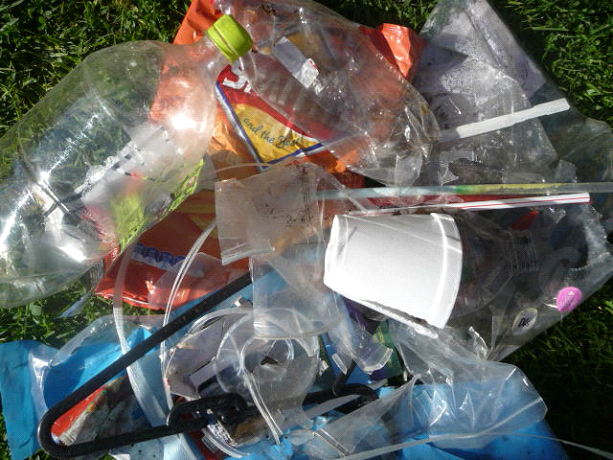 On the way home from the gym last week, a distance of about 1 km (1/2 mile), I counted the items of plastic litter on the curb as I walked. In that short distance I counted 63 pieces of plastic litter. Plastic drink bottles, bottle tops, candy wrappers, plastic film, polystyrene fragments etc. That seemed to be a lot to me. I guess it is a generational thing. Our parents would have been horrified to see that amount, whereas it seems to go unnoticed by our youth of today. In another 20 years how many pieces will there be on this stretch, -- 200? What will today’s youth think of that new amount then when they are older? Will their children be so readily accepting of a higher amount of litter?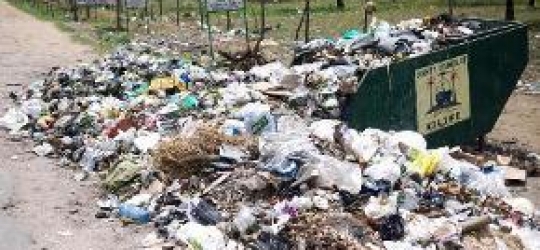
East Africa plans to ban use of plastics
Posted on March 13, 2012 by DrRossH in Plastic Limiting Regulations East Africa plans to ban use of plastics.
As stated above, the people in those regions are generally quite poor and even a plastic bag to them has some value. Only when it is ripped will it be discarded. There is no infrastructure in place for them to dispose the bags to, so they often get burned in an open fire or littered. Better to ban the thin bags outright and let the people provide their own bags from natural material they have there. This would create some industry for them, helping them out and stop polluting their country.
As for the comment by Jsays. Your comments are not correct. That is not how oxodegradable plastic works. Oxo degradation is a chemical reaction NOT a biological reaction. The bags are breaking down from day 1. They can roughly control how long it takes till they really start to break down, but once it has left the factory it is breaking down. If the climate is hot, they break down faster. There is no way to control it thereafter. So some will break down while in the shop before being given out even. Refer to the recent Tesco fiasco. After they have broken down they will not biodegrade, the manufactures like to say they will but they can’t prove it. If they could they would be citing ASTM or equiv biodegradation results, but they don’t. They cite a guide how to do the test but do not do actual tests. Don’t you wonder why that is? Plus in East Africa it is hot, and dry, this is not a surface rich biological environment. Oxo bags will just fragment into little pieces then remain as little plastic pieces all over the place.


Discussion · No Comments
There are no responses to "East Africa plans to ban use of plastics". Comments are closed for this post.Oops! Sorry, comments are closed at this time. Please try again later.