

 How many people today grab a takeaway coffee cup from the local cafe to drink on the go? We don’t know, but the number must be enormous.. Most every one of the above have a plastic top that will last 100s of years. Some cafes still use plastic cups that last a similar time. Is 10 minutes of coffee worth 100s of years of trash?
These items can be seen littering our gutters and on our streets all over the place. If they were all cardboard, they would still be littered, but they would, at least, be gone in a short time.
They do not need to be made of plastic.
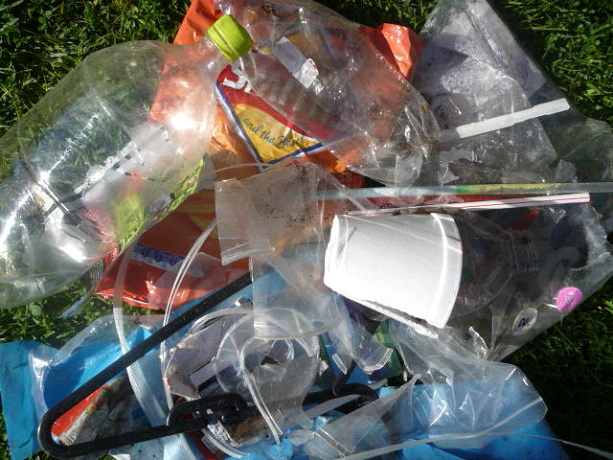 On the way home from the gym last week, a distance of about 1 km (1/2 mile), I counted the items of plastic litter on the curb as I walked. In that short distance I counted 63 pieces of plastic litter. Plastic drink bottles, bottle tops, candy wrappers, plastic film, polystyrene fragments etc. That seemed to be a lot to me. I guess it is a generational thing. Our parents would have been horrified to see that amount, whereas it seems to go unnoticed by our youth of today. In another 20 years how many pieces will there be on this stretch, -- 200? What will today’s youth think of that new amount then when they are older? Will their children be so readily accepting of a higher amount of litter?
One third of plastics taxable under PPT; revenues drop to £250m – UK
Posted on September 18, 2026 by DrRossH in Plastic RecyclingSource: One third of plastics taxable under PPT; revenues drop to £250m
HM Revenue and Customs (HMRC) figures show a similar amount for 2025 (38%), and the remaining 63% of plastic packaging tonnage manufactured in and imported into the UK, 51% met the 30% or more recycled plastic threshold, 11% was either exported, intended for export or converted and less than 1% was exempt because it was used for the immediate packaging of human medicines
Plastic Packaging Tax revenue accrued by HMRC in the financial year 2025 to 2026 totalled £250m, decreasing by 4% compared to 2024 to 2025, which totalled £261m.
As of 13 August 2026, there were 5,142 businesses registered for PPT.
David Gudgeon, head of external affairs, Reconomy, said: “The latest data shows that progress on increasing recycled content in plastic packaging appears to be stagnating, with more than a third of plastic packaging still failing to contain even 30% recycled plastic. With the proportion barely changing from 38% to 37% year-on-year, there is clearly much further to go to reduce reliance on virgin material.
“With prices for virgin plastic remaining persistently low, these figures aren’t surprising as it is often far cheaper to use new material than recycled content.
“This dynamic should start shifting as a range of policy measures begin to drive increased demand for recycled material, particularly Packaging Extended Producer Responsibility (EPR), Simpler Recycling and the Plastic Packaging Tax.
He added that UK recycling infrastructure is not currently equipped to cope with a significant increase in plastic packaging collected for recycling:
The widely documented structural challenges facing the sector, including competition from cheaper virgin plastics and soaring labour and energy costs, have forced some recycling plants to shut.
As a result, the UK remains heavily reliant on exporting plastic material, with the latest UK Government data showing that only around half of plastic packaging is recycled in the UK.
Gudgeon added: “We would urge the Government to create the conditions needed to unlock greater investment in domestic recycling infrastructure. In particular, it should consider following the EU’s lead by introducing mandatory minimum recycled-content requirements for plastic packaging. This would create more predictable demand for recycled material, providing greater certainty for recyclers and processors, while dovetailing with England’s plans to include flexible plastics in Simpler Recycling from April 2030. These requirements could include progressive targets for different grades of material, recognising that some packaging formats can accommodate higher levels of recycled content than others – for example, PET and HDPE bottles could have a minimum recycled-content target of 75%, while LDPE could move towards 100%.
“This would help tackle the 37% of packaging that currently falls below the Plastic Packaging Tax threshold, while supporting investment in recycling capacity, cutting plastic waste and carbon emissions and accelerating the transition to a circular economy.”


Discussion · No Comments
There are no responses to "One third of plastics taxable under PPT; revenues drop to £250m – UK". Comments are closed for this post.Oops! Sorry, comments are closed at this time. Please try again later.