


 How many people today grab a takeaway coffee cup from the local cafe to drink on the go? We don’t know, but the number must be enormous.. Most every one of the above have a plastic top that will last 100s of years. Some cafes still use plastic cups that last a similar time. Is 10 minutes of coffee worth 100s of years of trash?
These items can be seen littering our gutters and on our streets all over the place. If they were all cardboard, they would still be littered, but they would, at least, be gone in a short time.
They do not need to be made of plastic.
How many people today grab a takeaway coffee cup from the local cafe to drink on the go? We don’t know, but the number must be enormous.. Most every one of the above have a plastic top that will last 100s of years. Some cafes still use plastic cups that last a similar time. Is 10 minutes of coffee worth 100s of years of trash?
These items can be seen littering our gutters and on our streets all over the place. If they were all cardboard, they would still be littered, but they would, at least, be gone in a short time.
They do not need to be made of plastic.
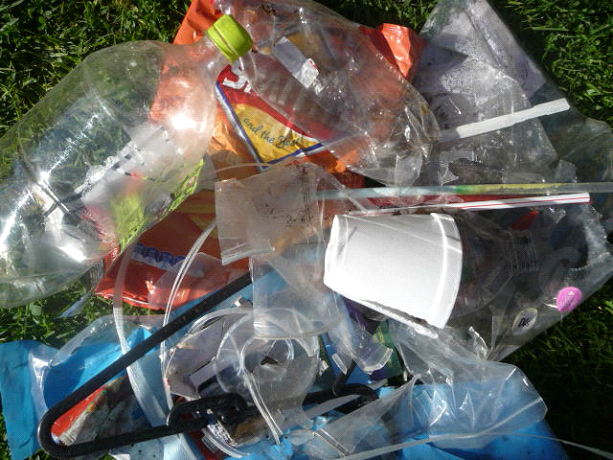 On the way home from the gym last week, a distance of about 1 km (1/2 mile), I counted the items of plastic litter on the curb as I walked. In that short distance I counted 63 pieces of plastic litter. Plastic drink bottles, bottle tops, candy wrappers, plastic film, polystyrene fragments etc. That seemed to be a lot to me. I guess it is a generational thing. Our parents would have been horrified to see that amount, whereas it seems to go unnoticed by our youth of today. In another 20 years how many pieces will there be on this stretch, -- 200? What will today’s youth think of that new amount then when they are older? Will their children be so readily accepting of a higher amount of litter?
 February 2022 - Page 2 of 2 - Plastic Waste Solutions
-
Australia great example in reuse transition: WEF
Posted on February 2, 2022 by DrRossH in Plastic Waste NewsAckowledging that national policy and legislation can play a major role in enabling the acceleration of reuse systems, the World Economic Forum (WEF) believes policy on reuse is still nascent for most countries, and says governments are at different levels...
Continue reading this entry → -
Waste claims by Morrison don’t match reality – Australia
Posted on February 1, 2022 by DrRossH in Plastic Limiting RegulationsSource: Waste claims by Morrison don’t match reality - Inside Waste Scott Morrison claimed his government was reducing the impact of plastic waste in Australia, and in Western Australia. But the reality is the recycling rate for plastic packaging has...
Continue reading this entry → -
Barriers to beverage industry circularity are complex – Australia
Posted on February 1, 2022 by DrRossH in Plastic Waste NewsSource: Barriers to beverage industry circularity are complex - Inside Waste The CDS tide of container scope is turning. As little as four years ago when the NSW scheme was kicked off, the government’s primary objective was to reduce litter...
Continue reading this entry →