


 How many people today grab a takeaway coffee cup from the local cafe to drink on the go? We don’t know, but the number must be enormous.. Most every one of the above have a plastic top that will last 100s of years. Some cafes still use plastic cups that last a similar time. Is 10 minutes of coffee worth 100s of years of trash?
These items can be seen littering our gutters and on our streets all over the place. If they were all cardboard, they would still be littered, but they would, at least, be gone in a short time.
They do not need to be made of plastic.
How many people today grab a takeaway coffee cup from the local cafe to drink on the go? We don’t know, but the number must be enormous.. Most every one of the above have a plastic top that will last 100s of years. Some cafes still use plastic cups that last a similar time. Is 10 minutes of coffee worth 100s of years of trash?
These items can be seen littering our gutters and on our streets all over the place. If they were all cardboard, they would still be littered, but they would, at least, be gone in a short time.
They do not need to be made of plastic.
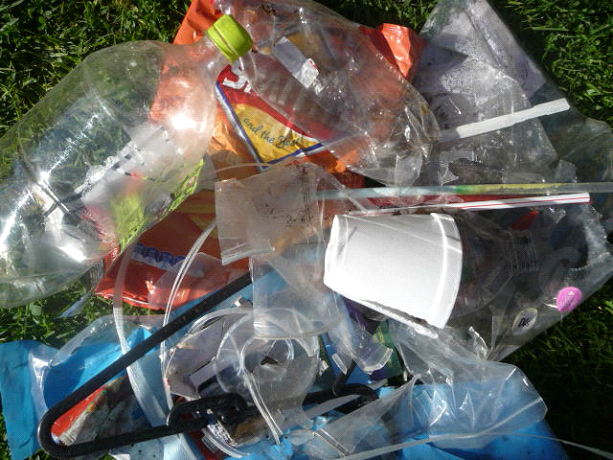 On the way home from the gym last week, a distance of about 1 km (1/2 mile), I counted the items of plastic litter on the curb as I walked. In that short distance I counted 63 pieces of plastic litter. Plastic drink bottles, bottle tops, candy wrappers, plastic film, polystyrene fragments etc. That seemed to be a lot to me. I guess it is a generational thing. Our parents would have been horrified to see that amount, whereas it seems to go unnoticed by our youth of today. In another 20 years how many pieces will there be on this stretch, -- 200? What will today’s youth think of that new amount then when they are older? Will their children be so readily accepting of a higher amount of litter?
Additives to make plastic biodegradable don’t cut it
Posted on November 11, 2016 by DrRossH in BioPlastics, Landfills and Disposal
Consumers and makers of plastic products want plastic to biodegrade to minimize the environmental impact, but some additives don’t live up to the claims.
Source: Additives to make plastic biodegradable don’t cut it
The additives chosen represented two categories: oxo-biodegradables and non-oxo-biodegradables. The oxo- family is described as enhancing biodegradation after initial oxidation of the polymer. The non-oxo additives are described as having a different mode of action. (One of the additives was initially chosen as representative of a combination approach, but the company later dropped that description.)
The results of the experiments can be summed up very simply: we found no evidence that the additives we tested resulted in any significant biodegradation of either the polyethylene film or the PET sheet in the environments we used. There were no significant differences between the samples with and without the additives, and no evidence of substantial biodegradation of any of the samples.
This was a well done experiment with sufficiently long times to notice any change. We have asked them what the non-oxo additive was as they did not detail what that was. We can’ tell if it was landfill-biodegradable, compostable or other form.
Hence we can’t tell what they did. The danger of their summary is to have all additives or biodegradable plastics lumped in with this experiment’s results. The only thing we can say so far is that the oxo degradable additive did not work. No surprises there.


Discussion · No Comments
There are no responses to "Additives to make plastic biodegradable don’t cut it". Comments are closed for this post.Oops! Sorry, comments are closed at this time. Please try again later.