


 How many people today grab a takeaway coffee cup from the local cafe to drink on the go? We don’t know, but the number must be enormous.. Most every one of the above have a plastic top that will last 100s of years. Some cafes still use plastic cups that last a similar time. Is 10 minutes of coffee worth 100s of years of trash?
These items can be seen littering our gutters and on our streets all over the place. If they were all cardboard, they would still be littered, but they would, at least, be gone in a short time.
They do not need to be made of plastic.
How many people today grab a takeaway coffee cup from the local cafe to drink on the go? We don’t know, but the number must be enormous.. Most every one of the above have a plastic top that will last 100s of years. Some cafes still use plastic cups that last a similar time. Is 10 minutes of coffee worth 100s of years of trash?
These items can be seen littering our gutters and on our streets all over the place. If they were all cardboard, they would still be littered, but they would, at least, be gone in a short time.
They do not need to be made of plastic.
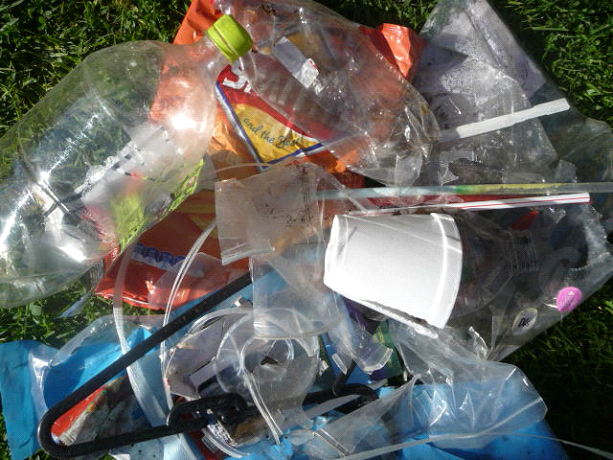 On the way home from the gym last week, a distance of about 1 km (1/2 mile), I counted the items of plastic litter on the curb as I walked. In that short distance I counted 63 pieces of plastic litter. Plastic drink bottles, bottle tops, candy wrappers, plastic film, polystyrene fragments etc. That seemed to be a lot to me. I guess it is a generational thing. Our parents would have been horrified to see that amount, whereas it seems to go unnoticed by our youth of today. In another 20 years how many pieces will there be on this stretch, -- 200? What will today’s youth think of that new amount then when they are older? Will their children be so readily accepting of a higher amount of litter?
 Oceans of plastic killing turtles as the Australian Federal government pursues a carbon tax
Posted on December 30, 2011 by DrRossH in Plastic Waste NewsWhere do we start on plastic waste discussions? It is such a big problem that most people prefer to keep their head in the sand and do nothing about it. Plastic waste is probably our biggest environmental problem, on comparison with warming of the planet and its consequences. We used more plastic in the last 10 years than all of last century. The only way to address this is put responsibility on the people that make plastic items. Plastic bottle deposit and refund schemes are an effective way to address plastic waste in those items. Recycling rates in South Australia are over 80% because of this. 25% elsewhere. Plastic bag bans or even a small plastic bag fee have dropped consumption by over 90% in places that have done it. Why does the Australian govt say it will cost them $271 million for shops to charge a fee for bags? It should cost the govt very little and cost the consumer if they continue to use them. Then the consumers will stop using them for the most part. So the only real person to be affected is the manufacturer of the plastic bags and isn’t that what we want?
Plastic food packaging is getting out of control, there are so many items packages in plastic now, most of which has a life of a few minutes once the consumer purchases them. What was wrong with paper bags and cardboard packaging? It is not food waste as some claim, it is because it is cheaper for manufacturers to do this. If we made it so it wasn’t cheaper to use this plastic then they would go back to biodegradable materials like paper and cardboard.
We can now make plastics simply biodegrade in a landfill. The addition of a small amount of additive to the plastic at product formation time will give the plastic properties such that when it is disposed to a landfill (80% of all plastic go to a landfill), it will biodegrade down and go away.


Discussion · No Comments
There are no responses to "Oceans of plastic killing turtles as the Australian Federal government pursues a carbon tax". Comments are closed for this post.Oops! Sorry, comments are closed at this time. Please try again later.