


 How many people today grab a takeaway coffee cup from the local cafe to drink on the go? We don’t know, but the number must be enormous.. Most every one of the above have a plastic top that will last 100s of years. Some cafes still use plastic cups that last a similar time. Is 10 minutes of coffee worth 100s of years of trash?
These items can be seen littering our gutters and on our streets all over the place. If they were all cardboard, they would still be littered, but they would, at least, be gone in a short time.
They do not need to be made of plastic.
How many people today grab a takeaway coffee cup from the local cafe to drink on the go? We don’t know, but the number must be enormous.. Most every one of the above have a plastic top that will last 100s of years. Some cafes still use plastic cups that last a similar time. Is 10 minutes of coffee worth 100s of years of trash?
These items can be seen littering our gutters and on our streets all over the place. If they were all cardboard, they would still be littered, but they would, at least, be gone in a short time.
They do not need to be made of plastic.
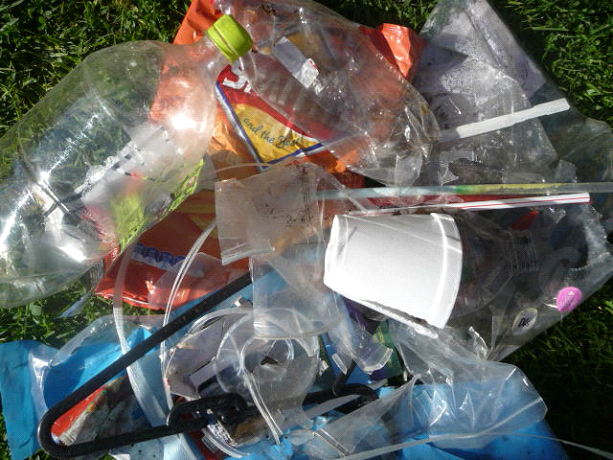 On the way home from the gym last week, a distance of about 1 km (1/2 mile), I counted the items of plastic litter on the curb as I walked. In that short distance I counted 63 pieces of plastic litter. Plastic drink bottles, bottle tops, candy wrappers, plastic film, polystyrene fragments etc. That seemed to be a lot to me. I guess it is a generational thing. Our parents would have been horrified to see that amount, whereas it seems to go unnoticed by our youth of today. In another 20 years how many pieces will there be on this stretch, -- 200? What will today’s youth think of that new amount then when they are older? Will their children be so readily accepting of a higher amount of litter?
 Plastic alternatives could make marine pollution even worse, report finds
Posted on September 16, 2019 by DrRossH in Plastic Waste NewsCompostable alternatives to plastic could worsen marine pollution and have other serious environmental impacts, a report from a committee of UK MPs has warned.
The world has a plastic problem — millions of tons of plastic enter the oceans every year, polluting our seas, littering our beaches and endangering wildlife.
In an attempt to curb the devastation wreaked on the oceans and on the environment, many businesses and consumers are turning to alternatives to plastic — like biodegradable or compostable packaging.
But instead of alleviating the problem of pollution, replacing plastic with other materials can still have a disastrous environmental impact, a report released by the UK Parliament’s Environment, Food and Rural Affairs Committee warned.
In fact, such alternatives could even increase pollution by making people complacent about their use and disposal, the report released on Thursday suggested. It cited the environmental group Green Alliance, which had raised concerns about evidence that “people are more likely to discard material described as ‘biodegradable’ in the environment, which would make pollution on land and at sea even worse.”
The report found that consumers were confused about how to dispose of compostable packaging, which could result in contamination of recycling, as well as littering.
The committee said that materials were being used as substitutes for plastic “without proper consideration of wider environmental consequences, such as higher carbon emissions.”
In evidence included in the report, Juliet Phillips, ocean campaigner at the Environmental Investigation Agency stated that “if a biodegradable cup gets into the sea, it could pose just as much of a problem to marine life as a conventional plastic cup.”
The committee recommended that the UK Government should conduct a review of reusable and refillable packaging systems, and said that the UK government was not putting enough emphasis on reducing plastic food and drink packaging in the first place.
“We all know that plastic pollution of our rivers and seas is a huge problem. However, replacing plastic with other materials isn’t always the best solution, as all materials have an environmental impact,” said MP Neil Parish, the committee chair.
“My committee is also concerned that compostable plastics have been introduced without the right infrastructure or consumer understanding about how to dispose of them. Fundamentally, substitution is not the answer, and we need to look at ways to cut down on single use packaging,” he added.
“All food and drink packaging, whether plastic or another material, has an environmental impact,” the committee found.


Discussion · No Comments
There are no responses to "Plastic alternatives could make marine pollution even worse, report finds". Comments are closed for this post.Oops! Sorry, comments are closed at this time. Please try again later.