


 How many people today grab a takeaway coffee cup from the local cafe to drink on the go? We don’t know, but the number must be enormous.. Most every one of the above have a plastic top that will last 100s of years. Some cafes still use plastic cups that last a similar time. Is 10 minutes of coffee worth 100s of years of trash?
These items can be seen littering our gutters and on our streets all over the place. If they were all cardboard, they would still be littered, but they would, at least, be gone in a short time.
They do not need to be made of plastic.
How many people today grab a takeaway coffee cup from the local cafe to drink on the go? We don’t know, but the number must be enormous.. Most every one of the above have a plastic top that will last 100s of years. Some cafes still use plastic cups that last a similar time. Is 10 minutes of coffee worth 100s of years of trash?
These items can be seen littering our gutters and on our streets all over the place. If they were all cardboard, they would still be littered, but they would, at least, be gone in a short time.
They do not need to be made of plastic.
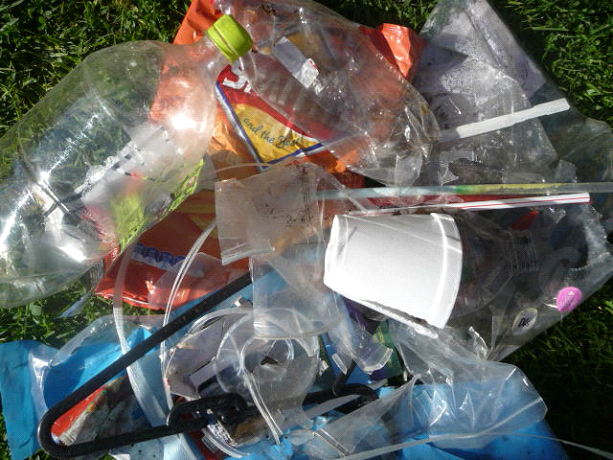 On the way home from the gym last week, a distance of about 1 km (1/2 mile), I counted the items of plastic litter on the curb as I walked. In that short distance I counted 63 pieces of plastic litter. Plastic drink bottles, bottle tops, candy wrappers, plastic film, polystyrene fragments etc. That seemed to be a lot to me. I guess it is a generational thing. Our parents would have been horrified to see that amount, whereas it seems to go unnoticed by our youth of today. In another 20 years how many pieces will there be on this stretch, -- 200? What will today’s youth think of that new amount then when they are older? Will their children be so readily accepting of a higher amount of litter?
 Plastic proves its worth for brands -UK
Posted on March 23, 2016 by DrRossH in Plastic Waste NewsThe numbers stack up for the rigid plastics market with steady growth forecast over the next decade. So what makes this material so appealing for brands and what challenges does it face? Simon Clarke finds out
via Packaging in 2016 | Plastic proves its worth for brands | Packaging News.
There needs to be a lot more discussion on the end of life than the token amount given above. The manufacturers are selfishly only looking at their total production costs.
The mention of biodegradable plastics above was simply incorrect. Either the author or the industry person does not know what they are talking about and should not write on such an important topic until they do know the actual details. What they were referring to was bioplastic. A plastic made from plants. A bioplastic is not a biodegradable plastic. PET from sugar cane is the exact same molecule as made from oil. Not biodegradable at all.
If the industry is so concerned about their clients getting quality food items AND were concerned about the huge problems their plastic is causing in the world then they should not be opposed to a plastics tax. An extra fee on every plastic item sold to cover the reclaiming of the plastic item so it does not get loose in the environment or oceans.
Just making and saying a plastic is recyclable does not exonerate them of any responsibility at all. A plastic can only be recycled 2-3 times before its properties are no longer suitable. That means it has to go to rubbish sooner than later. So all plastic recycling is doing is delaying the inevitable for a few months or a year or two. After that it all has to go to rubbish. The only way to treat plastic rubbish is to incinerate it to claim the energy from it or put it through the waste to oil plants to get the oil back out of it. Both of these options incur costs of collection and transportation back to the facilities. that is what the plastics tax would cover. The industry needs to support this. If they don’t then they are showing they only care about their profits and noting else. That is wrong.


Discussion · No Comments
There are no responses to "Plastic proves its worth for brands -UK". Comments are closed for this post.Oops! Sorry, comments are closed at this time. Please try again later.