


 How many people today grab a takeaway coffee cup from the local cafe to drink on the go? We don’t know, but the number must be enormous.. Most every one of the above have a plastic top that will last 100s of years. Some cafes still use plastic cups that last a similar time. Is 10 minutes of coffee worth 100s of years of trash?
These items can be seen littering our gutters and on our streets all over the place. If they were all cardboard, they would still be littered, but they would, at least, be gone in a short time.
They do not need to be made of plastic.
How many people today grab a takeaway coffee cup from the local cafe to drink on the go? We don’t know, but the number must be enormous.. Most every one of the above have a plastic top that will last 100s of years. Some cafes still use plastic cups that last a similar time. Is 10 minutes of coffee worth 100s of years of trash?
These items can be seen littering our gutters and on our streets all over the place. If they were all cardboard, they would still be littered, but they would, at least, be gone in a short time.
They do not need to be made of plastic.
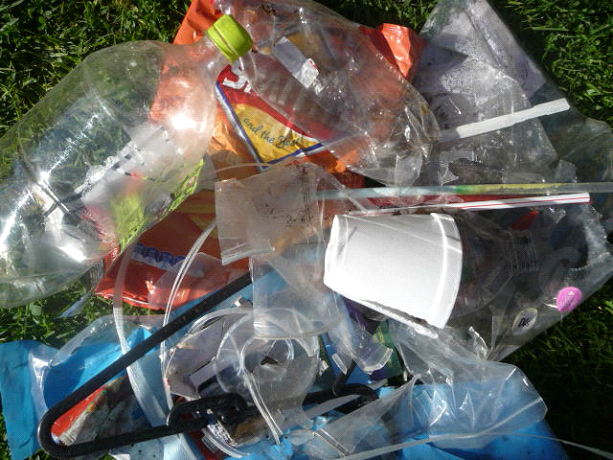 On the way home from the gym last week, a distance of about 1 km (1/2 mile), I counted the items of plastic litter on the curb as I walked. In that short distance I counted 63 pieces of plastic litter. Plastic drink bottles, bottle tops, candy wrappers, plastic film, polystyrene fragments etc. That seemed to be a lot to me. I guess it is a generational thing. Our parents would have been horrified to see that amount, whereas it seems to go unnoticed by our youth of today. In another 20 years how many pieces will there be on this stretch, -- 200? What will today’s youth think of that new amount then when they are older? Will their children be so readily accepting of a higher amount of litter?
 SINGLE-USE PLASTIC PRODUCTION STILL ON THE RISE; THREATENS TO PUSH SOCIETY FURTHER FROM NET-ZERO CLIMATE GOALS – Australia
Posted on February 6, 2023 by DrRossH in Plastic RecyclingSINGAPORE, Feb. 5, 2023 /PRNewswire/ — Minderoo Foundation’s groundbreaking Plastic Waste Makers Index (PWMI) 2023 shows the planet’s plastic pollution problem is worsening, and new estimates of lifecycle greenhouse gas emissions from single-use plastics demonstrate how single-use plastics producers also contribute to the climate crisis.
The report’s key findings reveal:
- Despite rising consumer awareness, corporate attention, and regulation, there is more single-use plastic waste than ever before – an additional 6 million metric tons (equivalent to almost 1 kg per person on the planet) generated in 2021 compared to 2019 – still almost entirely made from fossil fuels.
- Single-use plastic is not only a pollution crisis but a climate one. Lifecycle greenhouse gas (Scope 1, 2 and 3) emissions from single-use plastics in 2021 were equivalent to the total emissions of the United Kingdom (450 million metric tons CO₂e).
- Recycling is failing to scale fast enough and remains a marginal activity for the plastics sector – from 2019 to 2021, growth in single-use plastics made from fossil fuels was 15 times that from recycled plastics.
The Plastic Waste Makers Index 2023 brings the benchmark up to date with data to the end of 2021 (the first edition covered 2019). It discovered that the global population used 139 MMT (million metric tons) of single-use plastic in 2021, up from 133 MMT in 2019.
The composition of the top 100 petrochemical companies with the largest plastic waste footprint is strikingly similar to the first PWMI.
Dr Andrew Forrest AO, Chairman of Minderoo Foundation, said: “The fossil-fuel giants aren’t tackling the problem of plastics – it’s the opposite, they’re making even more of a product that threatens our people and planet.
“We need a fundamentally different approach that turns the tap off on new plastic production. We need a ‘polymer premium’ on every kilogram of plastic polymer made from fossil fuel. We need financial incentives that encourage re-use and recycling and the build of new, critical infrastructure.
“If you’re investing in polymer producers right now when there isn’t a polymer premium in place, then your hands are covered in the blood of the destruction of nature.”
Among the report’s key recommendations is a stark call for investors and financial institutions to use engagement, proxy voting and divestment strategies to pressure petrochemical companies building new fossil fuel-based polymer production facilities.
“This comprehensive report provides a useful benchmark for embarking on plastic and climate-related research and shareholder engagement efforts,” said Casey Clark, President and Chief Investment Officer of Rockefeller Asset Management. “Investors, regulatory bodies, and civil society have emphasised the need to reduce plastic consumption, increase waste management efforts, and transition to ‘circular’ modes of living. Even with that backdrop, the global intake of raw virgin materials and single-use plastics continues to rise.”
Download the full report here.


Discussion · No Comments
There are no responses to "SINGLE-USE PLASTIC PRODUCTION STILL ON THE RISE; THREATENS TO PUSH SOCIETY FURTHER FROM NET-ZERO CLIMATE GOALS – Australia". Comments are closed for this post.Oops! Sorry, comments are closed at this time. Please try again later.