


 How many people today grab a takeaway coffee cup from the local cafe to drink on the go? We don’t know, but the number must be enormous.. Most every one of the above have a plastic top that will last 100s of years. Some cafes still use plastic cups that last a similar time. Is 10 minutes of coffee worth 100s of years of trash?
These items can be seen littering our gutters and on our streets all over the place. If they were all cardboard, they would still be littered, but they would, at least, be gone in a short time.
They do not need to be made of plastic.
How many people today grab a takeaway coffee cup from the local cafe to drink on the go? We don’t know, but the number must be enormous.. Most every one of the above have a plastic top that will last 100s of years. Some cafes still use plastic cups that last a similar time. Is 10 minutes of coffee worth 100s of years of trash?
These items can be seen littering our gutters and on our streets all over the place. If they were all cardboard, they would still be littered, but they would, at least, be gone in a short time.
They do not need to be made of plastic.
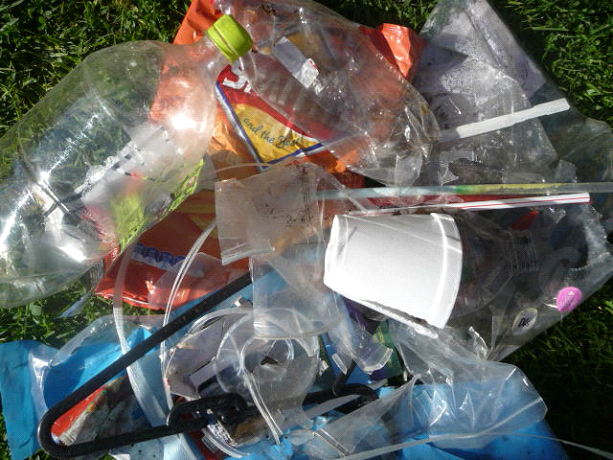 On the way home from the gym last week, a distance of about 1 km (1/2 mile), I counted the items of plastic litter on the curb as I walked. In that short distance I counted 63 pieces of plastic litter. Plastic drink bottles, bottle tops, candy wrappers, plastic film, polystyrene fragments etc. That seemed to be a lot to me. I guess it is a generational thing. Our parents would have been horrified to see that amount, whereas it seems to go unnoticed by our youth of today. In another 20 years how many pieces will there be on this stretch, -- 200? What will today’s youth think of that new amount then when they are older? Will their children be so readily accepting of a higher amount of litter?
 Study Finds Ingeo™ Biopolymer Stable in Landfills with No Statistically Significant Quantity of Methane Released
Posted on September 16, 2012 by DrRossH in Plastic Waste NewsThis article should have been titled ” Study finds that Biodegradation claims by Ingeo Biopolymer are false”.
To be fair, they do say that ” However, these systems (composting in order to enable the landfill diversion ) are still emerging and developing. The reality today is that a percentage of Ingeo products end up in landfills.” This study shows that PLA will not biodegrade in landfills which is where over 95% of our plastic waste is ending up. Yet why do we see everywhere that these Cargil PLA products are labelled as Biodegradable with little to no clarification on how these items are to be disposed in order for the Biodegradation claim to be realised. This is spin marketing and should be stopped from being allowed. If the makers of PLA and other compostable manufacturers want to market “biodegradable” products and enjoy the sales that come from this green marketing, then they have to also introduce the required infrastructure necessary to get their products diverted from landfills. They are happy to take the profits that come from marketing biodegradable products to unsuspecting consumers, but when it really comes to issues to allow their products to actually biodegrade, they are nowhere to be seen and say it is the local government’s (i.e. us the tax payer) responsibility to pay for the infrastructure so their products can biodegrade.


Discussion · No Comments
There are no responses to "Study Finds Ingeo™ Biopolymer Stable in Landfills with No Statistically Significant Quantity of Methane Released". Comments are closed for this post.Oops! Sorry, comments are closed at this time. Please try again later.