

 How many people today grab a takeaway coffee cup from the local cafe to drink on the go? We don’t know, but the number must be enormous.. Most every one of the above have a plastic top that will last 100s of years. Some cafes still use plastic cups that last a similar time. Is 10 minutes of coffee worth 100s of years of trash?
These items can be seen littering our gutters and on our streets all over the place. If they were all cardboard, they would still be littered, but they would, at least, be gone in a short time.
They do not need to be made of plastic.
How many people today grab a takeaway coffee cup from the local cafe to drink on the go? We don’t know, but the number must be enormous.. Most every one of the above have a plastic top that will last 100s of years. Some cafes still use plastic cups that last a similar time. Is 10 minutes of coffee worth 100s of years of trash?
These items can be seen littering our gutters and on our streets all over the place. If they were all cardboard, they would still be littered, but they would, at least, be gone in a short time.
They do not need to be made of plastic.
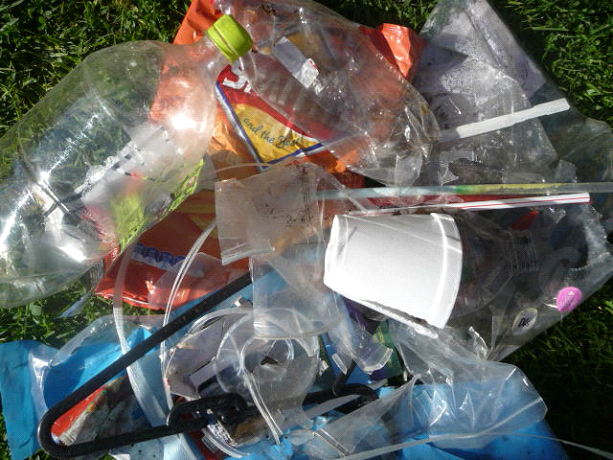 On the way home from the gym last week, a distance of about 1 km (1/2 mile), I counted the items of plastic litter on the curb as I walked. In that short distance I counted 63 pieces of plastic litter. Plastic drink bottles, bottle tops, candy wrappers, plastic film, polystyrene fragments etc. That seemed to be a lot to me. I guess it is a generational thing. Our parents would have been horrified to see that amount, whereas it seems to go unnoticed by our youth of today. In another 20 years how many pieces will there be on this stretch, -- 200? What will today’s youth think of that new amount then when they are older? Will their children be so readily accepting of a higher amount of litter?
 composting Archives - Plastic Waste Solutions
-
GreenGenius Biodegradable Plastic Bags had to go out of business
Posted on July 29, 2012 by DrRossH in BioPlastics, Plastic Waste NewsGreen Genius: Press Release. This is a fine but sad example of the power of big lobbying money to create a law in California that contradicts scientific evidence. The compostable plastic (bioplastic) manufacturers through their 'efforts' got a law passed...
Continue reading this entry → -
Bioplastics Get Trashed in Rhode Island
Posted on June 11, 2012 by DrRossH in BioPlasticsBioplastics Get Trashed in Rhode Island - Front Page Journal -. The folks in Rhode Island have come to this unfortunate reality realisation that the green promises of Bioplastics can not deliver benefits for their...
Continue reading this entry → -

Biodegradable Polymer Market to Hit 1.1 Million Tonnes by 2017
Posted on April 2, 2012 by DrRossH in BioPlasticsBiodegradable Polymer Market to Hit 1.1 Million Tonnes by 2017 - Waste Mangagement World. Before we get too excited let's not forget; 1) Compostable plastics or Bioplastics have poor industrial infrastructure for composting, 2) If Bioplastics are not sent...
Continue reading this entry → -
What is so great about PLA? (The plastic made from corn)
Posted on December 20, 2011 by DrRossH in BioPlasticsAs posted on a Linked-In discussion group recently. PLA products are made from food. They are compostable ONLY in an industrial composting facility and that is now questionable and certainly NOT IN A HOME COMPOSTER. They are physically weak, cannot be...
Continue reading this entry →