


 How many people today grab a takeaway coffee cup from the local cafe to drink on the go? We don’t know, but the number must be enormous.. Most every one of the above have a plastic top that will last 100s of years. Some cafes still use plastic cups that last a similar time. Is 10 minutes of coffee worth 100s of years of trash?
These items can be seen littering our gutters and on our streets all over the place. If they were all cardboard, they would still be littered, but they would, at least, be gone in a short time.
They do not need to be made of plastic.
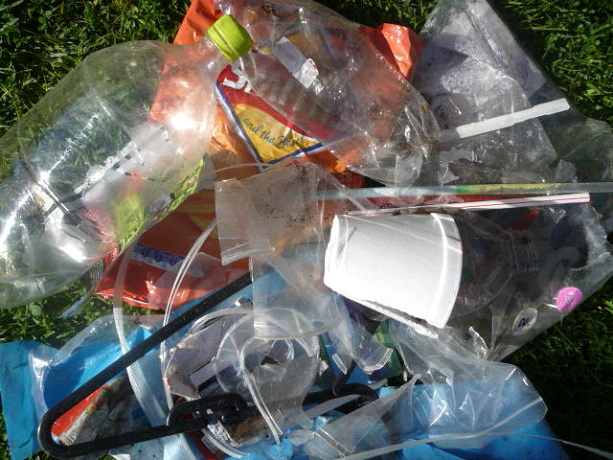 On the way home from the gym last week, a distance of about 1 km (1/2 mile), I counted the items of plastic litter on the curb as I walked. In that short distance I counted 63 pieces of plastic litter. Plastic drink bottles, bottle tops, candy wrappers, plastic film, polystyrene fragments etc. That seemed to be a lot to me. I guess it is a generational thing. Our parents would have been horrified to see that amount, whereas it seems to go unnoticed by our youth of today. In another 20 years how many pieces will there be on this stretch, -- 200? What will today’s youth think of that new amount then when they are older? Will their children be so readily accepting of a higher amount of litter?

The world’s plastic problem, in two charts
Posted on August 8, 2017 by DrRossH in Plastic Waste News
Plastic doesn’t disappear—at least not on any timescale relevant to a human lifespan

Source: The world’s plastic problem, in two charts
Jambeck and her coauthors found that although rates of recycling and incineration will likely increase steadily over the next decades, based on current rates of plastic manufacturing and waste, 12 billion metric tons of plastic waste will be lying around on the planet by 2050. That’s 1.6 metric tons, or roughly the weight of a midsize car, for every single person alive today.
This is a lot but when you consider every person includes people in 3rd world countries (who make up about 60% of the worlds population), whose plastic foot print is all most zero. That means the people is the west are making a very high plastic foot print. This is where it has to stop first.


Discussion · No Comments
There are no responses to "The world’s plastic problem, in two charts". Comments are closed for this post.Oops! Sorry, comments are closed at this time. Please try again later.