


 How many people today grab a takeaway coffee cup from the local cafe to drink on the go? We don’t know, but the number must be enormous.. Most every one of the above have a plastic top that will last 100s of years. Some cafes still use plastic cups that last a similar time. Is 10 minutes of coffee worth 100s of years of trash?
These items can be seen littering our gutters and on our streets all over the place. If they were all cardboard, they would still be littered, but they would, at least, be gone in a short time.
They do not need to be made of plastic.
How many people today grab a takeaway coffee cup from the local cafe to drink on the go? We don’t know, but the number must be enormous.. Most every one of the above have a plastic top that will last 100s of years. Some cafes still use plastic cups that last a similar time. Is 10 minutes of coffee worth 100s of years of trash?
These items can be seen littering our gutters and on our streets all over the place. If they were all cardboard, they would still be littered, but they would, at least, be gone in a short time.
They do not need to be made of plastic.
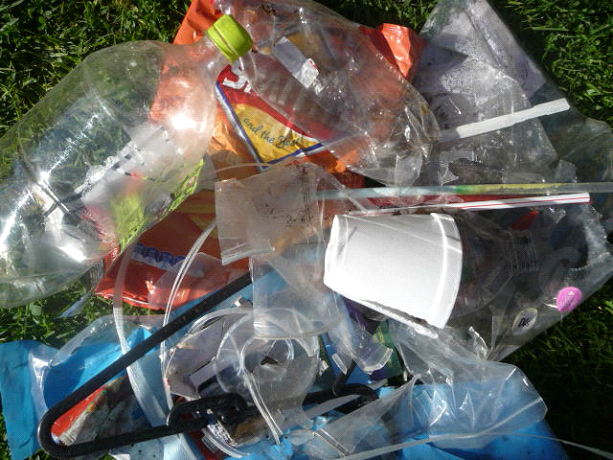 On the way home from the gym last week, a distance of about 1 km (1/2 mile), I counted the items of plastic litter on the curb as I walked. In that short distance I counted 63 pieces of plastic litter. Plastic drink bottles, bottle tops, candy wrappers, plastic film, polystyrene fragments etc. That seemed to be a lot to me. I guess it is a generational thing. Our parents would have been horrified to see that amount, whereas it seems to go unnoticed by our youth of today. In another 20 years how many pieces will there be on this stretch, -- 200? What will today’s youth think of that new amount then when they are older? Will their children be so readily accepting of a higher amount of litter?
 Trends in Waste for 2013 – Canada
Posted on July 14, 2013 by DrRossH in Plastic Waste NewsSolid Waste & Recycling Magazine.
The sooner we get to zero waste the better off we will be. Manufacturers have to made partially responsible for their products as an incentive to get the products back out of the waste stream. The consumers need to stat to pay the real cost of a product which not only includes its production cost but its appropriate disposal cost and any costs to bring the environment back to nil effect by the products manufacture. We already see some such scheme in operation such as container deposit schemes for drink bottles, charges for plastic bags at the check out counter, carbon offsetting on airline fares. But these need to go from voluntary schemes to being part of the normal cycle. Manufacturers need to embrace these rather than lobby to fight them. They are too slow to act and too focused on maintaining their 1980s manufacturing model to step forward into the 21st century. Those that do first will have the cream of the sales crop. Those that don’t will be left wondering what happened and paying more and more legal fees to save their dying ship.


Discussion · No Comments
There are no responses to "Trends in Waste for 2013 – Canada". Comments are closed for this post.Oops! Sorry, comments are closed at this time. Please try again later.