


 How many people today grab a takeaway coffee cup from the local cafe to drink on the go? We don’t know, but the number must be enormous.. Most every one of the above have a plastic top that will last 100s of years. Some cafes still use plastic cups that last a similar time. Is 10 minutes of coffee worth 100s of years of trash?
These items can be seen littering our gutters and on our streets all over the place. If they were all cardboard, they would still be littered, but they would, at least, be gone in a short time.
They do not need to be made of plastic.
How many people today grab a takeaway coffee cup from the local cafe to drink on the go? We don’t know, but the number must be enormous.. Most every one of the above have a plastic top that will last 100s of years. Some cafes still use plastic cups that last a similar time. Is 10 minutes of coffee worth 100s of years of trash?
These items can be seen littering our gutters and on our streets all over the place. If they were all cardboard, they would still be littered, but they would, at least, be gone in a short time.
They do not need to be made of plastic.
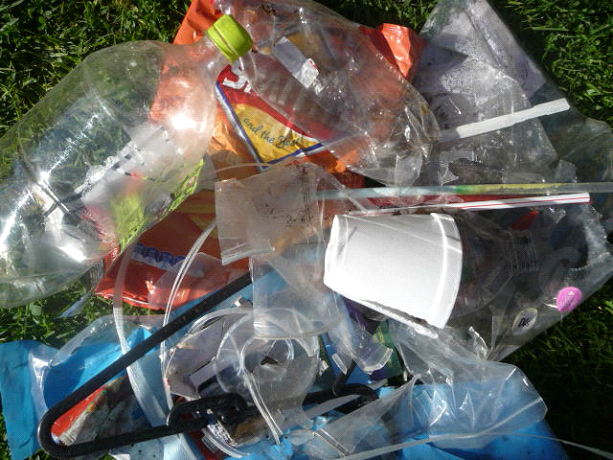 On the way home from the gym last week, a distance of about 1 km (1/2 mile), I counted the items of plastic litter on the curb as I walked. In that short distance I counted 63 pieces of plastic litter. Plastic drink bottles, bottle tops, candy wrappers, plastic film, polystyrene fragments etc. That seemed to be a lot to me. I guess it is a generational thing. Our parents would have been horrified to see that amount, whereas it seems to go unnoticed by our youth of today. In another 20 years how many pieces will there be on this stretch, -- 200? What will today’s youth think of that new amount then when they are older? Will their children be so readily accepting of a higher amount of litter?
 U.S. Recycling Industry Is Struggling To Figure Out A Future Without China
Posted on August 22, 2019 by DrRossH in Plastic Waste NewsSource: U.S. Recycling Industry Is Struggling To Figure Out A Future Without China
In March, executives from big companies that make or package everything from water to toothpaste in plastic met in Washington, D.C. Recyclers and the people who collect and sort trash were there too. It was the whole chain that makes up the plastic pipeline. It was a time of reckoning.
John Caturano of Nestlé Waters North America, which makes bottled water, said plastic is getting a bad reputation. “The water bottle has in some ways become the mink coat or the pack of cigarettes. It’s socially not very acceptable to the young folks, and that scares me,” he said during a panel called Life After National Sword.
Sunil Bagaria, who runs recycling company GDB International, took his colleagues to task. “Forever, we have depended on shipping our scrap overseas,” he bemoaned. “Let’s stop that.” European countries, he added, “are recycling 35% to 40% [of their plastic waste]. The U.S. only recycles 10%. How tragic is that?”


Discussion · No Comments
There are no responses to "U.S. Recycling Industry Is Struggling To Figure Out A Future Without China". Comments are closed for this post.Oops! Sorry, comments are closed at this time. Please try again later.