


 How many people today grab a takeaway coffee cup from the local cafe to drink on the go? We don’t know, but the number must be enormous.. Most every one of the above have a plastic top that will last 100s of years. Some cafes still use plastic cups that last a similar time. Is 10 minutes of coffee worth 100s of years of trash?
These items can be seen littering our gutters and on our streets all over the place. If they were all cardboard, they would still be littered, but they would, at least, be gone in a short time.
They do not need to be made of plastic.
How many people today grab a takeaway coffee cup from the local cafe to drink on the go? We don’t know, but the number must be enormous.. Most every one of the above have a plastic top that will last 100s of years. Some cafes still use plastic cups that last a similar time. Is 10 minutes of coffee worth 100s of years of trash?
These items can be seen littering our gutters and on our streets all over the place. If they were all cardboard, they would still be littered, but they would, at least, be gone in a short time.
They do not need to be made of plastic.
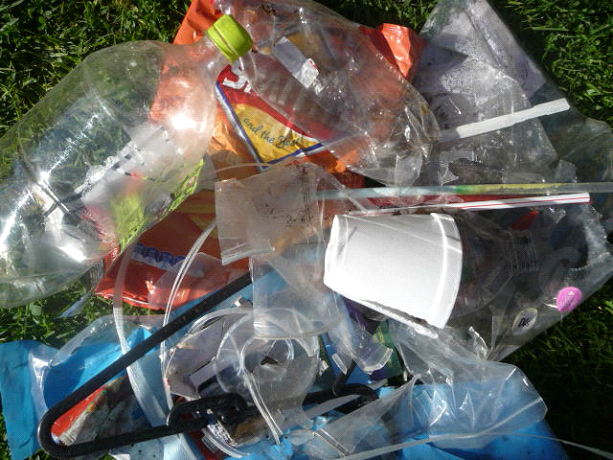 On the way home from the gym last week, a distance of about 1 km (1/2 mile), I counted the items of plastic litter on the curb as I walked. In that short distance I counted 63 pieces of plastic litter. Plastic drink bottles, bottle tops, candy wrappers, plastic film, polystyrene fragments etc. That seemed to be a lot to me. I guess it is a generational thing. Our parents would have been horrified to see that amount, whereas it seems to go unnoticed by our youth of today. In another 20 years how many pieces will there be on this stretch, -- 200? What will today’s youth think of that new amount then when they are older? Will their children be so readily accepting of a higher amount of litter?
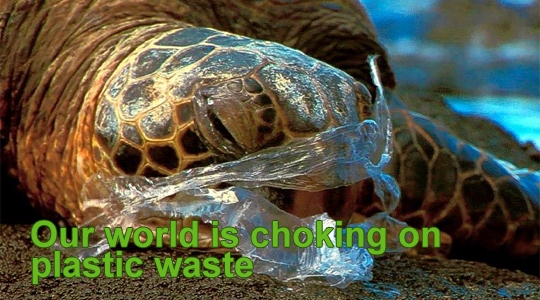
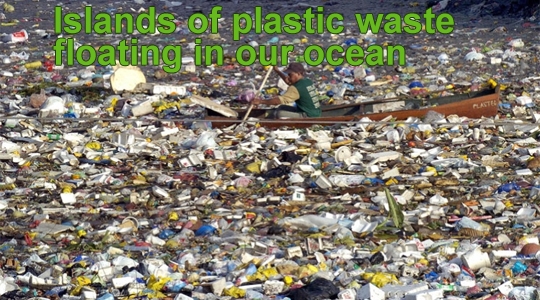
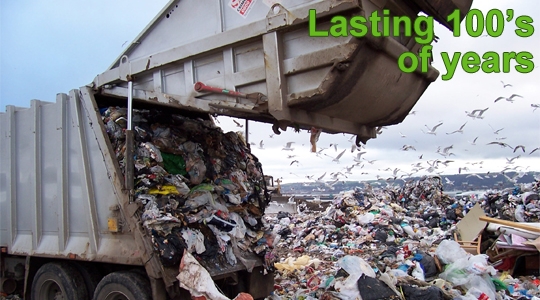
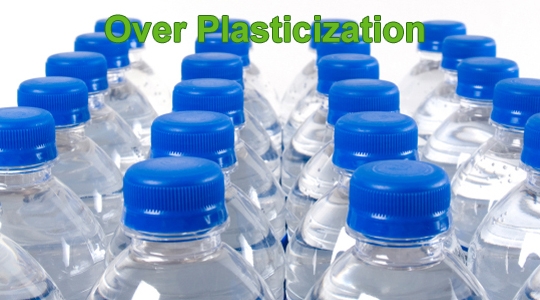
It lasts a long long time!
Every piece of plastic ever made and disposed to a landfill still exists. Why? Plastic is not a natural product therefore nature has no way to break it down, other than 100s to 1000’s of years of time.
More plastic was manufactured in the last 10 years than all of last century.
Where does it go? Where do we put 300 million tons of plastic every year that is specifically designed not to break down?
Over Plasticisation
Over recent decades we have moved to a society of disposable plastic products. Plastic has a wonderful array of properties that have made it ideal for many of these applications. However the rate at which we are demanding these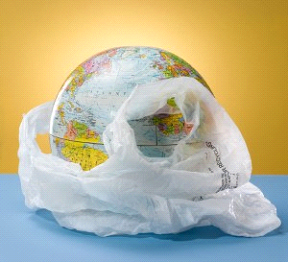
items is growing rapidly and is unsustainable. The total world plastic production in the first decade of this century has roughly equalled the total plastic production of the entire 20th century. However what has gone unnoticed by almost all of us is the disposal problem this has made and continues to make. We now have millions of tons of plastic to dispose of every year. 30 million tons in the USA, 5 million tons in the UK and 1.5 million tons in Australia, let alone the rest of the world. Much of this plastic was manufactured for very short time use such as disposable products. They are used once for a few minutes then discarded. Some of it is recycled (7% in the USA and 19% in Australia); however, most of it is disposed to trash where it goes to landfills. There it will persist for many 100’s to 1000’s of years.
The list of over usage of plastic is enormous when we stop and take a look around. We use plastic everywhere. So much of it is just used once and then discarded.
Some common examples are:
- Thin wall retail plastic bags
- Disposable drink bottles-water bottles and soda bottles
- Plastic plates, cups and cup lids
- Plastic cutlery
- Plastic straws
- Plastic shrink wrap for protection during freight
- Disposable syringes
- Food packaging containers
We use plastic to our benefit, but there is a huge environmental cost to this. There are many websites describing and illustrating the damage this plastic is doing.
Some common areas are:
- Pollution of our oceans with plastic debris
- Pollution of tropical once idyllic island beaches
- Destruction of wildlife by a number of unpleasant deaths
- Contamination of fish through their ingestion of small plastic fragments which have absorbed toxins as the fragments float through the seas
A 21st Century Goldmine
As reinforced on the recently popular USA CNBC documentary, Trash Inc, The Secret Life of Trash, the average consumer is led to believe that the plastic is gone once it is put into a bin. The trash industry hauls it away never to be seen again. That is where our problem really starts. What do we do with an item that was intentionally made to be almost indestructible and has very little worth?Our lives have become fully dependent on a product that we have no effective way to dispose of, until recently that is with the development of landfill biodegradable additives for plastics.
Latest from the blog
-
Progress in packaging sustainability: slow but steady
Posted on July 26, 2024 in Plastic RecyclingA new report from Rabobank examining the progress made on achieving more sustainability in the plastic packaging industry warns that companies are finding it challenging to meet the commitments made in the past. Source: Progress in packaging sustainability: slow but steady | Sustainable Plastics The report looked at the situation in the EU and US...
Continue reading this entry → -
Biden endorses ‘ambitious’ plastics agenda, reductions in virgin production -USA
Posted on July 26, 2024 in Plastic Limiting Regulations, Plastic RecyclingAn 83-page report from the Biden administration is the most detailed federal government policy statement yet on addressing plastics in the environment. Source: Biden endorses ‘ambitious' plastics agenda, reductions in virgin production | Plastics News The report also highlighted environmental justice concerns. "Safe and affordable alternatives to plastic are not always accessible," the report said. "At...
Continue reading this entry → -

AORA raises concern over FOGO contamination – Australia
Posted on July 25, 2024 in Landfills and DisposalWithout a collective approach to FOGO contamination challenges, organic waste is at risk of being sent back to landfill. Source: AORA raises concern over FOGO contamination - Waste Management Review The rate of contamination (non-organic material in the FOGO feedstock stream) is an ongoing concern. Removing this contamination is difficult and costly for organics processors...
Continue reading this entry →
-