


 How many people today grab a takeaway coffee cup from the local cafe to drink on the go? We don’t know, but the number must be enormous.. Most every one of the above have a plastic top that will last 100s of years. Some cafes still use plastic cups that last a similar time. Is 10 minutes of coffee worth 100s of years of trash?
These items can be seen littering our gutters and on our streets all over the place. If they were all cardboard, they would still be littered, but they would, at least, be gone in a short time.
They do not need to be made of plastic.
How many people today grab a takeaway coffee cup from the local cafe to drink on the go? We don’t know, but the number must be enormous.. Most every one of the above have a plastic top that will last 100s of years. Some cafes still use plastic cups that last a similar time. Is 10 minutes of coffee worth 100s of years of trash?
These items can be seen littering our gutters and on our streets all over the place. If they were all cardboard, they would still be littered, but they would, at least, be gone in a short time.
They do not need to be made of plastic.
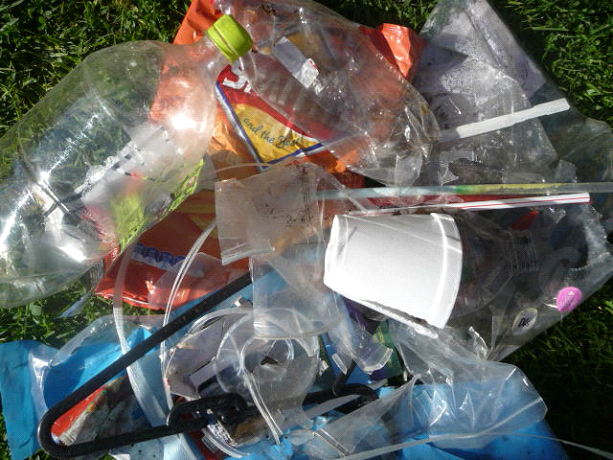 On the way home from the gym last week, a distance of about 1 km (1/2 mile), I counted the items of plastic litter on the curb as I walked. In that short distance I counted 63 pieces of plastic litter. Plastic drink bottles, bottle tops, candy wrappers, plastic film, polystyrene fragments etc. That seemed to be a lot to me. I guess it is a generational thing. Our parents would have been horrified to see that amount, whereas it seems to go unnoticed by our youth of today. In another 20 years how many pieces will there be on this stretch, -- 200? What will today’s youth think of that new amount then when they are older? Will their children be so readily accepting of a higher amount of litter?
 December 2013 - Plastic Waste Solutions
-
‘Every little helps’ is a dangerous mantra for climate change – UK
Posted on December 24, 2013 by DrRossH in Plastic Limiting Regulations'Every little helps' is a dangerous mantra for climate change | Guardian Sustainable Business | Guardian Professional. We should not confuse the issue of climate change with the issue of over use of plastic. ...
Continue reading this entry → -
Plastics Industry commits itself to increase percentage of recycled products and evoke better civic discipline among masses- India
Posted on December 16, 2013 by DrRossH in Plastic Waste NewsPlastics Industry commits itself to increase percentage of recycled products and evoke better civic discipline among masses. While there are several additives to make plastics landfill biodegradable, what we should be careful is of greenwashing by people pushing oxodegradable additives. 1)...
Continue reading this entry → -
Bioplastics Demand to hit 6.2 m tons by 2017
Posted on December 13, 2013 by DrRossH in Plastic Waste NewsSustainable packaging demand fuels increase in bioplastic production. The strongest growth likely will be...
Continue reading this entry → -
Less than 2% of degradable bags can cause detriment to carrier bag recycling, study shows
Posted on December 10, 2013 by DrRossH in Plastic Waste NewsLess than 2% of biodegradable bags can cause detriment to carrier bag recycling, study shows. This article reflects most of the misunderstandings of the use of the word biodegradable. It starts off talking about biodegradable plastics...
Continue reading this entry → -
EuPC bio-bag findings attacked as ‘poor science’
Posted on December 10, 2013 by DrRossH in Plastic Waste NewsEuPC bio-bag findings attacked as ‘poor science’ http://www.europeanplasticsnews.com/subscriber/headlines2.html?cat=1&id=3852 This article reflects most of the misunderstandings of the use of the word biodegradable. It starts off talking about biodegradable plastics then goes on to discuss degradable...
Continue reading this entry → -
Australian retailer backtracks on green initiative
Posted on December 9, 2013 by DrRossH in Plastic Limiting RegulationsAustralian retailer backtracks on green initiative - News - Plastics News. Geelong-based department store chain Target Australia Pty. Ltd. returned free bags to its 308 Target and Target Country stores in October, after removing them in June 2009. Cooper said Target...
Continue reading this entry → -
Study says recycling could create thousands of jobs in Indiana – USA
Posted on December 9, 2013 by DrRossH in Plastic Waste NewsStudy says recycling could create thousands of jobs in Indiana - News - Plastics News. Nearly 1.4 million tons of plastic gets tossed into landfills or burned in incinerators each year in Indiana, accounting for about a sixth of all...
Continue reading this entry → -

Ban on plastic bags makes sense – Boston
Posted on December 2, 2013 by DrRossH in Plastic Limiting RegulationsEagan: Ban on plastic bags makes sense | Boston Herald. Personally, I stopped listening to the climate change deniers after Hurricane Sandy all but shut down Manhattan. Then days ago a new FEMA map said a similar storm would wipe...
Continue reading this entry →