


 How many people today grab a takeaway coffee cup from the local cafe to drink on the go? We don’t know, but the number must be enormous.. Most every one of the above have a plastic top that will last 100s of years. Some cafes still use plastic cups that last a similar time. Is 10 minutes of coffee worth 100s of years of trash?
These items can be seen littering our gutters and on our streets all over the place. If they were all cardboard, they would still be littered, but they would, at least, be gone in a short time.
They do not need to be made of plastic.
How many people today grab a takeaway coffee cup from the local cafe to drink on the go? We don’t know, but the number must be enormous.. Most every one of the above have a plastic top that will last 100s of years. Some cafes still use plastic cups that last a similar time. Is 10 minutes of coffee worth 100s of years of trash?
These items can be seen littering our gutters and on our streets all over the place. If they were all cardboard, they would still be littered, but they would, at least, be gone in a short time.
They do not need to be made of plastic.
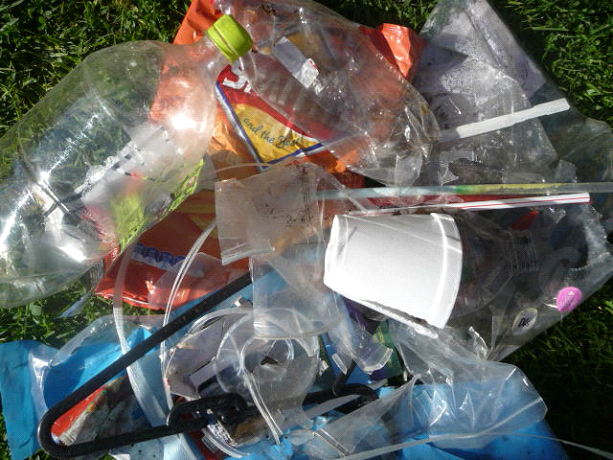 On the way home from the gym last week, a distance of about 1 km (1/2 mile), I counted the items of plastic litter on the curb as I walked. In that short distance I counted 63 pieces of plastic litter. Plastic drink bottles, bottle tops, candy wrappers, plastic film, polystyrene fragments etc. That seemed to be a lot to me. I guess it is a generational thing. Our parents would have been horrified to see that amount, whereas it seems to go unnoticed by our youth of today. In another 20 years how many pieces will there be on this stretch, -- 200? What will today’s youth think of that new amount then when they are older? Will their children be so readily accepting of a higher amount of litter?
 January 2015 - Plastic Waste Solutions
-
Non-degradable products: Plastic bags posing environmental hazards – The Express Tribune
Posted on January 28, 2015 by DrRossH in Plastic Limiting RegulationsNon-degradable products: Plastic bags posing environmental hazards – The Express Tribune. ISLAMABAD: The increasing prevalence of plastic use is not only adding to the municipal waste of the city but also causing environment hazards as the environmental regulatory body has failed...
Continue reading this entry → -
Oxo-biodegradable lobby slams ‘scaremongering’ – UK
Posted on January 28, 2015 by DrRossH in Plastic Limiting RegulationsOxo-biodegradable lobby slams 'scaremongering' - News - Plastics News. Last week the British Plastics Federation and others called on ministers to shelve any ideas about exempting plastic carrier bags made using biodegradable material from the charge, which is due to...
Continue reading this entry → -
Cameroonian authorities seize about 340 tons of non-biodegradable plastic bags – Africa – News – StarAfrica.com
Posted on January 22, 2015 by DrRossH in Plastic Limiting RegulationsCameroonian authorities seize about 340 tons of non-biodegradable plastic bags - Africa - News - StarAfrica.com. Around 340 tons of non-biodegradable wrappings have been seized in Cameroon since the launch of the operation to curb the spreading of such wrappings...
Continue reading this entry → -
Maine lawmaker wants to ban plastic microbeads – The Portland Press Herald / Maine Sunday Telegram
Posted on January 22, 2015 by DrRossH in Plastic Waste NewsMaine lawmaker wants to ban plastic microbeads - The Portland Press Herald / Maine Sunday Telegram. A bill from Democratic Rep. Joan Welsh of Rockport would ban the manufacture for sale of any personal care product that contains the microbeads...
Continue reading this entry → -
Researchers Propose Earth’s ‘Anthropocene’ Age of Humans Began With Fallout and Plastics
Posted on January 19, 2015 by DrRossH in Plastic Waste NewsResearchers Propose Earth's 'Anthropocene' Age of Humans Began With Fallout and Plastics - NYTimes.com. In a paper published online this week by the journal Quaternary International, 26 members of the working group point roughly to 1950 as the starting point,...
Continue reading this entry → -
Everyone Wins with Market Based EPR Recycling Programs for Packaging USA
Posted on January 15, 2015 by DrRossH in Stewardship Waste ProgramsEveryone Wins with Market Based EPR Recycling Programs for Packaging - Waste Industry Magazine | Recycling Publication | Waste News. During the last few years, extended producer responsibility (EPR) has ignited the imagination of recycling professionals and advocates who have...
Continue reading this entry → -
China’s new plastics ban in Jilin province boosts bioplastics sector
Posted on January 15, 2015 by DrRossH in Plastic Waste NewsChina's new plastics ban in Jilin province boosts bioplastics sector - News - Plastics News. A new ban on non-biodegradable plastic bags and food service items is creating an unprecedented surge for bioplastics manufacturing in China. Unlike China’s nationwide plastic...
Continue reading this entry → -
Plastics, the environment are not enemies – California
Posted on January 15, 2015 by DrRossH in Plastic Limiting RegulationsPlastics, the environment are not enemies - Viewpoint - Plastics News. The plastic bag ban in California should stand. There are too many vested interests by manufacturers with corporate budgets to deceive the people on the issue of a plastic...
Continue reading this entry →