


 How many people today grab a takeaway coffee cup from the local cafe to drink on the go? We don’t know, but the number must be enormous.. Most every one of the above have a plastic top that will last 100s of years. Some cafes still use plastic cups that last a similar time. Is 10 minutes of coffee worth 100s of years of trash?
These items can be seen littering our gutters and on our streets all over the place. If they were all cardboard, they would still be littered, but they would, at least, be gone in a short time.
They do not need to be made of plastic.
How many people today grab a takeaway coffee cup from the local cafe to drink on the go? We don’t know, but the number must be enormous.. Most every one of the above have a plastic top that will last 100s of years. Some cafes still use plastic cups that last a similar time. Is 10 minutes of coffee worth 100s of years of trash?
These items can be seen littering our gutters and on our streets all over the place. If they were all cardboard, they would still be littered, but they would, at least, be gone in a short time.
They do not need to be made of plastic.
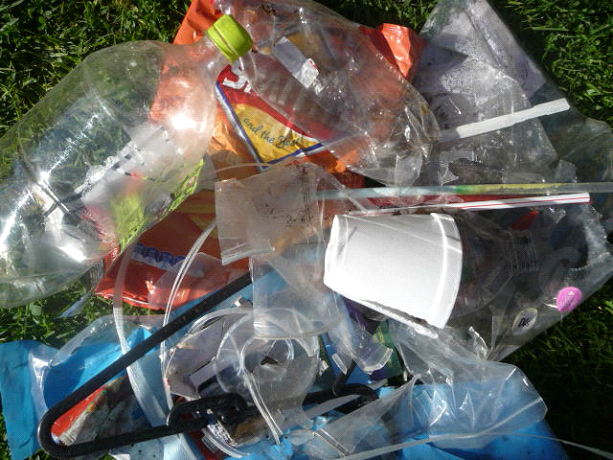 On the way home from the gym last week, a distance of about 1 km (1/2 mile), I counted the items of plastic litter on the curb as I walked. In that short distance I counted 63 pieces of plastic litter. Plastic drink bottles, bottle tops, candy wrappers, plastic film, polystyrene fragments etc. That seemed to be a lot to me. I guess it is a generational thing. Our parents would have been horrified to see that amount, whereas it seems to go unnoticed by our youth of today. In another 20 years how many pieces will there be on this stretch, -- 200? What will today’s youth think of that new amount then when they are older? Will their children be so readily accepting of a higher amount of litter?
 June 2021 - Plastic Waste Solutions
-
Victoria’s CDS – who’s right and who’s wrong? – Australia
Posted on June 29, 2021 by DrRossH in Plastic Limiting RegulationsSource: Victoria’s CDS – who’s right and who’s wrong? - Inside Waste Victoria’s governmental announcement on April 14 that it had made a decision on its Container Deposit Scheme (CDS), which will follow the NSW split responsibility model where there will...
Continue reading this entry → -
D-Day for plastics is coming – Australia
Posted on June 23, 2021 by DrRossH in Plastic Waste NewsSource: D-Day for plastics is coming | The Fifth Estate 1 July 2021 marks the first day of the federal government’s ban that will prevent the export of Australia’s mixed plastic waste to overseas countries. This is significant. This is the...
Continue reading this entry → -
Report reveals how important labelling is to recycling – Australia
Posted on June 18, 2021 by DrRossH in General, Plastic Waste NewsSource: Report reveals how important labelling is to recycling - Inside Waste A new report into consumer insights has today revealed that 76 per cent of Australians think that recycling is the most positive thing they can do for the...
Continue reading this entry → -

Survey: Cap safety and ease-of-use trumps green cred
Posted on June 18, 2021 by DrRossH in Plastic Waste NewsOriginal article Sidel conducted out a survey to better understand consumers’ environmental perceptions, their requirements for closures in general, and their opinions about tethered caps, and results show that although participants agree tethered caps contribute to a greener perception of...
Continue reading this entry → -
NSW & WA leading with fast-tracked plastics ban – Australia
Posted on June 18, 2021 by DrRossH in Plastic Limiting RegulationsOriginal Article From next year, lightweight plastic bags, disposable plastic straws and cutlery, plastic cotton buds, microbeads, and other forms of single-use plastics will be banned in the NSW state, as part of the government’s $365 million five-year plan to...
Continue reading this entry → -
NSW moves to cut single-use plastics by 2025 – Australia
Posted on June 15, 2021 by DrRossH in Plastic Limiting RegulationsSource: NSW moves to cut single-use plastics by 2025 - ABC News The NSW Government is set to unveil ambitious plans to drastically cut the amount of plastic and food scraps that end up in landfill by 2025. Key points: The laws are...
Continue reading this entry → -

Coke joins forces with Ocean Cleanup – Inside Waste
Posted on June 10, 2021 by DrRossH in Plastic Waste NewsSource: Coke joins forces with Ocean Cleanup - Inside Waste “The Ocean Cleanup’s mission is to rid the oceans of plastic,” said Boyan Slat, Founder and CEO, The Ocean Cleanup. “With 1000 rivers emitting nearly 80% of river-carried plastic into...
Continue reading this entry → -
WorldStar-dust settles on ANZ packaging innovators
Posted on June 10, 2021 by DrRossH in Plastic Waste NewsCoca-Cola Europacific Partners (CCEP) won the pinnacle Gold for its work in producing Australia’s first 100 per cent recycled PET (rPET) bottle for carbonated beverages – a world-first in the Coca-Cola bottler system to make the change at scale. The increase...
Continue reading this entry →