


 How many people today grab a takeaway coffee cup from the local cafe to drink on the go? We don’t know, but the number must be enormous.. Most every one of the above have a plastic top that will last 100s of years. Some cafes still use plastic cups that last a similar time. Is 10 minutes of coffee worth 100s of years of trash?
These items can be seen littering our gutters and on our streets all over the place. If they were all cardboard, they would still be littered, but they would, at least, be gone in a short time.
They do not need to be made of plastic.
How many people today grab a takeaway coffee cup from the local cafe to drink on the go? We don’t know, but the number must be enormous.. Most every one of the above have a plastic top that will last 100s of years. Some cafes still use plastic cups that last a similar time. Is 10 minutes of coffee worth 100s of years of trash?
These items can be seen littering our gutters and on our streets all over the place. If they were all cardboard, they would still be littered, but they would, at least, be gone in a short time.
They do not need to be made of plastic.
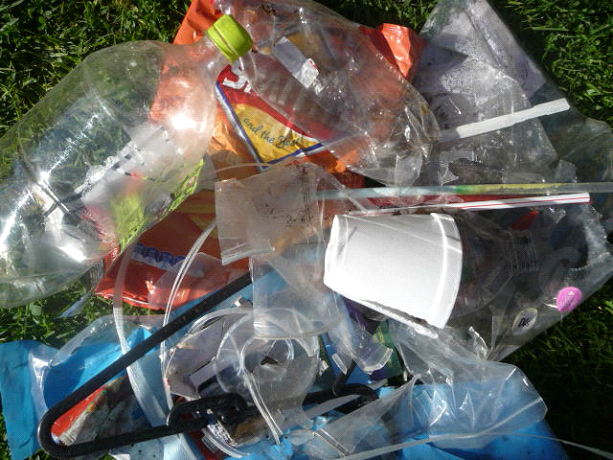 On the way home from the gym last week, a distance of about 1 km (1/2 mile), I counted the items of plastic litter on the curb as I walked. In that short distance I counted 63 pieces of plastic litter. Plastic drink bottles, bottle tops, candy wrappers, plastic film, polystyrene fragments etc. That seemed to be a lot to me. I guess it is a generational thing. Our parents would have been horrified to see that amount, whereas it seems to go unnoticed by our youth of today. In another 20 years how many pieces will there be on this stretch, -- 200? What will today’s youth think of that new amount then when they are older? Will their children be so readily accepting of a higher amount of litter?
 August 2020 - Plastic Waste Solutions
-
There’s plastic in your prawns, UQ research reveals – Australia
Posted on August 18, 2020 by DrRossH in Plastic & WildlifeSource: There's plastic in your prawns, UQ research reveals We found polyvinyl chloride — a widely used synthetic plastic polymer — in all samples we tested, but the most common plastic in use today — polyethylene — was the highest...
Continue reading this entry → -
Evaluating scenarios toward zero plastic pollution
Posted on August 9, 2020 by DrRossH in Plastic Waste NewsSource: Evaluating scenarios toward zero plastic pollution | Science Abstract Plastic pollution is a pervasive and growing problem. To estimate the effectiveness of interventions to reduce plastic pollution, we modeled stocks and flows of municipal solid waste and four sources of...
Continue reading this entry → -
How Earth’s plastic pollution problem could look by 2040
Posted on August 9, 2020 by DrRossH in Plastic Waste NewsSource: How Earth's plastic pollution problem could look by 2040 When it comes to plastic pollution, we know close to nothing about how and where plastic waste is generated, managed, treated and disposed of, especially in low and middle income...
Continue reading this entry →