


 How many people today grab a takeaway coffee cup from the local cafe to drink on the go? We don’t know, but the number must be enormous.. Most every one of the above have a plastic top that will last 100s of years. Some cafes still use plastic cups that last a similar time. Is 10 minutes of coffee worth 100s of years of trash?
These items can be seen littering our gutters and on our streets all over the place. If they were all cardboard, they would still be littered, but they would, at least, be gone in a short time.
They do not need to be made of plastic.
How many people today grab a takeaway coffee cup from the local cafe to drink on the go? We don’t know, but the number must be enormous.. Most every one of the above have a plastic top that will last 100s of years. Some cafes still use plastic cups that last a similar time. Is 10 minutes of coffee worth 100s of years of trash?
These items can be seen littering our gutters and on our streets all over the place. If they were all cardboard, they would still be littered, but they would, at least, be gone in a short time.
They do not need to be made of plastic.
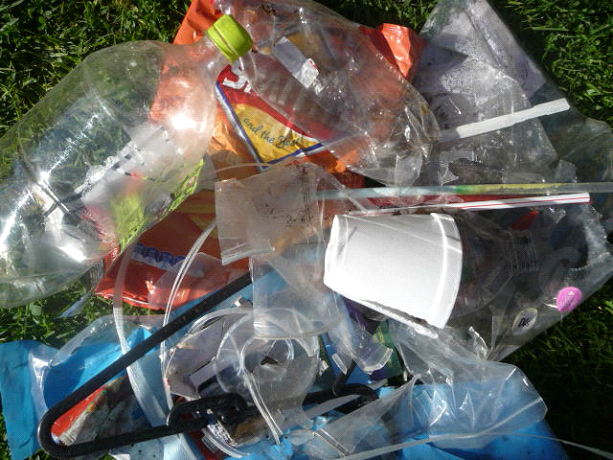 On the way home from the gym last week, a distance of about 1 km (1/2 mile), I counted the items of plastic litter on the curb as I walked. In that short distance I counted 63 pieces of plastic litter. Plastic drink bottles, bottle tops, candy wrappers, plastic film, polystyrene fragments etc. That seemed to be a lot to me. I guess it is a generational thing. Our parents would have been horrified to see that amount, whereas it seems to go unnoticed by our youth of today. In another 20 years how many pieces will there be on this stretch, -- 200? What will today’s youth think of that new amount then when they are older? Will their children be so readily accepting of a higher amount of litter?
 EU agrees to bans on many single-use plastics
Posted on December 22, 2018 by DrRossH in Plastic Limiting RegulationsThe European Parliament and the Council of the European Union have reached a provisional political agreement on the ambitious new measures proposed by the European Commission to tackle marine litter at its source, targeting the 10 plastic products most often found on beaches, as well as abandoned fishing gear.
The agreement, reached Dec. 19, is based on the single-use plastics proposal presented in May by the EC as part of the European Plastics Strategy, adopted earlier this year.
The new EU directive has been billed as “the most ambitious legal instrument” addressing marine litter.
As part of the directive, where alternatives are easily available and affordable, single-use plastic products will be banned from the market, such as plastic cotton swabs, cutlery, plates, straws, drink stirrers, sticks for balloons, products made of oxodegradable plastic and food and beverage containers made of expanded polystyrene. For other products, the focus is on limiting their use through a national reduction in consumption; on design and labeling requirements; and waste management/clean-up obligations for producers.
The new rules contribute to a broader effort of turning Europe into a more sustainable, circular economy, reflected in the Circular Economy Action Plan adopted in December 2015.
“I warmly welcome today’s ambitious agreement reached on our Commission proposal to reduce single use plastics. This agreement truly helps protect our people and our planet,” Frans Timmermans, EC first vice-president responsible for sustainable development, said.
The provisional agreement must now be formally approved by the European Parliament and the Council. Following its approval, the new directive will be published in the EU’s Official Journal and the member states will have to transpose it after two years.


Discussion · No Comments
There are no responses to "EU agrees to bans on many single-use plastics". Comments are closed for this post.Oops! Sorry, comments are closed at this time. Please try again later.