


 How many people today grab a takeaway coffee cup from the local cafe to drink on the go? We don’t know, but the number must be enormous.. Most every one of the above have a plastic top that will last 100s of years. Some cafes still use plastic cups that last a similar time. Is 10 minutes of coffee worth 100s of years of trash?
These items can be seen littering our gutters and on our streets all over the place. If they were all cardboard, they would still be littered, but they would, at least, be gone in a short time.
They do not need to be made of plastic.
How many people today grab a takeaway coffee cup from the local cafe to drink on the go? We don’t know, but the number must be enormous.. Most every one of the above have a plastic top that will last 100s of years. Some cafes still use plastic cups that last a similar time. Is 10 minutes of coffee worth 100s of years of trash?
These items can be seen littering our gutters and on our streets all over the place. If they were all cardboard, they would still be littered, but they would, at least, be gone in a short time.
They do not need to be made of plastic.
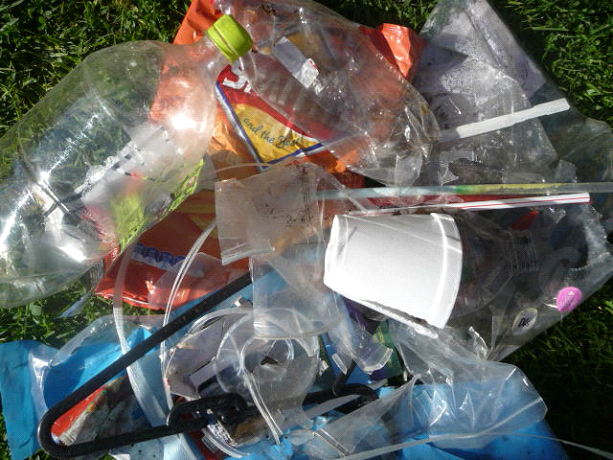 On the way home from the gym last week, a distance of about 1 km (1/2 mile), I counted the items of plastic litter on the curb as I walked. In that short distance I counted 63 pieces of plastic litter. Plastic drink bottles, bottle tops, candy wrappers, plastic film, polystyrene fragments etc. That seemed to be a lot to me. I guess it is a generational thing. Our parents would have been horrified to see that amount, whereas it seems to go unnoticed by our youth of today. In another 20 years how many pieces will there be on this stretch, -- 200? What will today’s youth think of that new amount then when they are older? Will their children be so readily accepting of a higher amount of litter?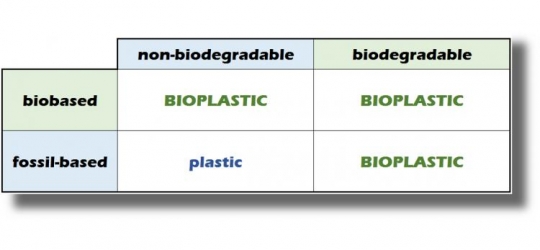
It’s time for bioplastics to be plastics
Posted on March 10, 2017 by DrRossH in Plastic Waste News“I wish people would stop calling PLA* a bioplastic…” said Steve Davies, director of public affairs and communications at NatureWorks during a recent meeting of the Sustainable Packaging Coalition’s Industry Leadership Committee on Bioplastics. “…and start thinking of it as one more functional material—dare I say it…another plastic.”
Source: It’s time for bioplastics to be plastics | Packaging Digest
The world of bioplastics has exploded, and there is an amazing breadth of materials that can be classified as bioplastics. Part of the reason, arguably, is the far-reaching definition of a bioplastic. The most commonly used definition, popularized by European Bioplastics, is that a bioplastic is bio-based, biodegradable or both. To unpack this, that means that a bioplastic can be inherently non-biodegradable. It means that a bioplastic can contain 0% bio-based materials. A bioplastic may be 100% fossil-based. It can be any combination of being partially bio-based, fully bio-based, non-bio-based, biodegradable, compostable or non-biodegradable, so long as it is not both non-bio-based and non-biodegradable.
There are four basic permutations of these characteristics, and bioplastics encompass three of them:

It is correct that the world of Bioplastics has become very confusing and the word is often used to the sellers advantage rather that what the buyer thinks he is getting.


Discussion · No Comments
There are no responses to "It’s time for bioplastics to be plastics". Comments are closed for this post.Oops! Sorry, comments are closed at this time. Please try again later.