


 How many people today grab a takeaway coffee cup from the local cafe to drink on the go? We don’t know, but the number must be enormous.. Most every one of the above have a plastic top that will last 100s of years. Some cafes still use plastic cups that last a similar time. Is 10 minutes of coffee worth 100s of years of trash?
These items can be seen littering our gutters and on our streets all over the place. If they were all cardboard, they would still be littered, but they would, at least, be gone in a short time.
They do not need to be made of plastic.
How many people today grab a takeaway coffee cup from the local cafe to drink on the go? We don’t know, but the number must be enormous.. Most every one of the above have a plastic top that will last 100s of years. Some cafes still use plastic cups that last a similar time. Is 10 minutes of coffee worth 100s of years of trash?
These items can be seen littering our gutters and on our streets all over the place. If they were all cardboard, they would still be littered, but they would, at least, be gone in a short time.
They do not need to be made of plastic.
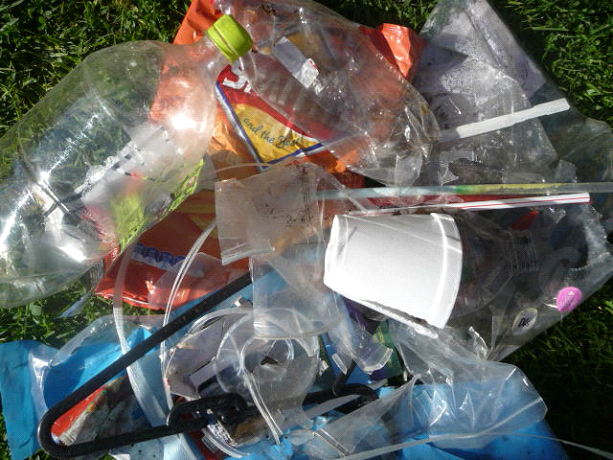 On the way home from the gym last week, a distance of about 1 km (1/2 mile), I counted the items of plastic litter on the curb as I walked. In that short distance I counted 63 pieces of plastic litter. Plastic drink bottles, bottle tops, candy wrappers, plastic film, polystyrene fragments etc. That seemed to be a lot to me. I guess it is a generational thing. Our parents would have been horrified to see that amount, whereas it seems to go unnoticed by our youth of today. In another 20 years how many pieces will there be on this stretch, -- 200? What will today’s youth think of that new amount then when they are older? Will their children be so readily accepting of a higher amount of litter?
 Supply Side vs Disposal Side Issues for Plastic
Posted on December 30, 2011 by DrRossH in Plastic Waste NewsWhat we need to understand is there are two sides to plastic. The supply side and the disposal side. Manufacturers are very keen to address the supply side as that is where they can lessen their costs and provide a more secure supply of raw material. But what they to not like to address is the disposal side. And this is the side that affects the consumers the most. Making a bottle with a thinner wall poses just the same disposal problem as the original one. Making a bottle out of plant material doesn’t mean it is biodegradable. If disposed to a landfill it will still last many 100’s of years like a regular plastic bottle.
So manufacturers need to look at the disposal side too before they can claim environmental sustainability. This can be in actively encouraging recycling schemes, deposit schemes, setting up recycling containers or partnering with local councils to help pay for the set up of recycling bins. Also they could put in a landfill biodegradable additive to the plastic in the event that their bottle (or any other item) does go to a landfill, then they know it will biodegrade away and not sit there for 100’s of years. If the bottle doesn’t go to a landfill but is recycled or incinerated for its energy the inclusion of these additives does not affect these operations at all. So it is a good back stop allowance that puts an end to plastic waste no matter how it is treated.
http://www.packagingnews.co.uk/news/pg-sets-new-2020-packaging-target/?dm_i=JLP,KIYD,4IFNBS,1O1DP,1


Discussion · No Comments
There are no responses to "Supply Side vs Disposal Side Issues for Plastic". Comments are closed for this post.Oops! Sorry, comments are closed at this time. Please try again later.