


 How many people today grab a takeaway coffee cup from the local cafe to drink on the go? We don’t know, but the number must be enormous.. Most every one of the above have a plastic top that will last 100s of years. Some cafes still use plastic cups that last a similar time. Is 10 minutes of coffee worth 100s of years of trash?
These items can be seen littering our gutters and on our streets all over the place. If they were all cardboard, they would still be littered, but they would, at least, be gone in a short time.
They do not need to be made of plastic.
How many people today grab a takeaway coffee cup from the local cafe to drink on the go? We don’t know, but the number must be enormous.. Most every one of the above have a plastic top that will last 100s of years. Some cafes still use plastic cups that last a similar time. Is 10 minutes of coffee worth 100s of years of trash?
These items can be seen littering our gutters and on our streets all over the place. If they were all cardboard, they would still be littered, but they would, at least, be gone in a short time.
They do not need to be made of plastic.
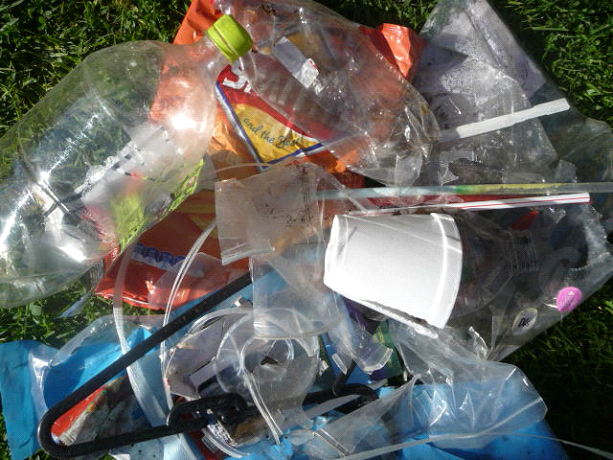 On the way home from the gym last week, a distance of about 1 km (1/2 mile), I counted the items of plastic litter on the curb as I walked. In that short distance I counted 63 pieces of plastic litter. Plastic drink bottles, bottle tops, candy wrappers, plastic film, polystyrene fragments etc. That seemed to be a lot to me. I guess it is a generational thing. Our parents would have been horrified to see that amount, whereas it seems to go unnoticed by our youth of today. In another 20 years how many pieces will there be on this stretch, -- 200? What will today’s youth think of that new amount then when they are older? Will their children be so readily accepting of a higher amount of litter?
 biodegradable plastics Archives - Page 5 of 5 - Plastic Waste Solutions
-
DiningIn Goes Green With Biodegradable Cutlery
Posted on March 14, 2012 by DrRossH in Environmental Plastic SuppliersDiningIn Goes Green With Biodegradable Cutlery - MarketWatch. If only others can be convinced now to go this way so that all this disposable plasticware is not just dumped to a landfill to last 100's of years. These will biodegrade...
Continue reading this entry → -
Transitions2Earth Transitions2Earth – Super Biodegradable Cutlery and Serving Ware
Posted on March 14, 2012 by DrRossH in Environmental Plastic SuppliersTransitions2Earth Transitions2Earth - Super Biodegradable Cutlery and Serving Ware. At last a suppplier of biodegradable cutlery at low prices.
Continue reading this entry → -
Discussion on Bioplastics
Posted on March 2, 2012 by DrRossH in BioPlasticsThe following discussion was on a LinkedIn biodegradable plastics group. The question was; We are looking at Biobased products made from renewable resources. The Products are of Injection Mold & should have atleast 12-14 years life. Any Suggestions? Reply from Teresa Clark...
Continue reading this entry → -

Bids for 70 MW Methane Project at Massive Mexican Landfill
Posted on March 2, 2012 by DrRossH in Landfills and Disposal, Plastic Waste NewsRecovering energy from biodegraded materials is going to be a large player in energy supplies. This is supporting the use of landfill biodegradable plastics as a means to eliminate plastic waste. Bids for 70 MW Methane Project at Massive...
Continue reading this entry →