


 How many people today grab a takeaway coffee cup from the local cafe to drink on the go? We don’t know, but the number must be enormous.. Most every one of the above have a plastic top that will last 100s of years. Some cafes still use plastic cups that last a similar time. Is 10 minutes of coffee worth 100s of years of trash?
These items can be seen littering our gutters and on our streets all over the place. If they were all cardboard, they would still be littered, but they would, at least, be gone in a short time.
They do not need to be made of plastic.
How many people today grab a takeaway coffee cup from the local cafe to drink on the go? We don’t know, but the number must be enormous.. Most every one of the above have a plastic top that will last 100s of years. Some cafes still use plastic cups that last a similar time. Is 10 minutes of coffee worth 100s of years of trash?
These items can be seen littering our gutters and on our streets all over the place. If they were all cardboard, they would still be littered, but they would, at least, be gone in a short time.
They do not need to be made of plastic.
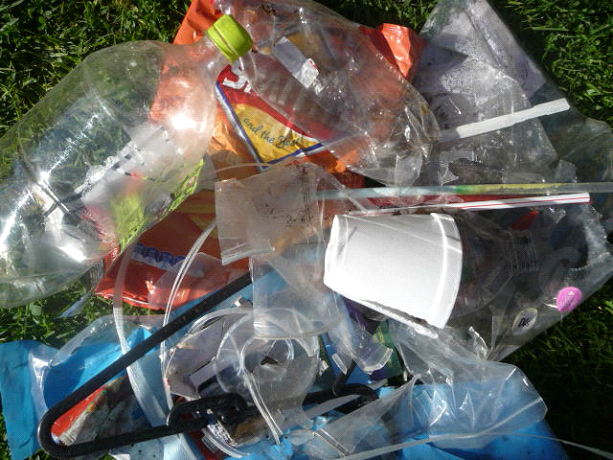 On the way home from the gym last week, a distance of about 1 km (1/2 mile), I counted the items of plastic litter on the curb as I walked. In that short distance I counted 63 pieces of plastic litter. Plastic drink bottles, bottle tops, candy wrappers, plastic film, polystyrene fragments etc. That seemed to be a lot to me. I guess it is a generational thing. Our parents would have been horrified to see that amount, whereas it seems to go unnoticed by our youth of today. In another 20 years how many pieces will there be on this stretch, -- 200? What will today’s youth think of that new amount then when they are older? Will their children be so readily accepting of a higher amount of litter?
 The plastics suffocating life within our oceans
Posted on December 12, 2017 by DrRossH in Plastic Waste NewsCompanies worldwide need incentives to find less harmful substitutes
Source: The plastics suffocating life within our oceans
Barring a technological breakthrough, any large company that makes the first move risks losing money or market share. This is a situation where regulators need to step in. A tax on single-use plastic — although it would need to be carefully structured — could give companies the incentives to use more expensive, but less damaging, materials and invest in research to find alternatives. Policymakers can also do more to change public behaviour. Recycling rates are much higher in countries that make it mandatory to run deposit return schemes — where consumers pay a small sum that can be recovered when they return a plastic bottle.
These are small easy changes to be made with some large impacts but industry wont’ do it unless they get paid more or legislated. So we need our governments to catch up with the world and support action to reduce this plastic waste problem.


Discussion · No Comments
There are no responses to "The plastics suffocating life within our oceans". Comments are closed for this post.Oops! Sorry, comments are closed at this time. Please try again later.