


 How many people today grab a takeaway coffee cup from the local cafe to drink on the go? We don’t know, but the number must be enormous.. Most every one of the above have a plastic top that will last 100s of years. Some cafes still use plastic cups that last a similar time. Is 10 minutes of coffee worth 100s of years of trash?
These items can be seen littering our gutters and on our streets all over the place. If they were all cardboard, they would still be littered, but they would, at least, be gone in a short time.
They do not need to be made of plastic.
How many people today grab a takeaway coffee cup from the local cafe to drink on the go? We don’t know, but the number must be enormous.. Most every one of the above have a plastic top that will last 100s of years. Some cafes still use plastic cups that last a similar time. Is 10 minutes of coffee worth 100s of years of trash?
These items can be seen littering our gutters and on our streets all over the place. If they were all cardboard, they would still be littered, but they would, at least, be gone in a short time.
They do not need to be made of plastic.
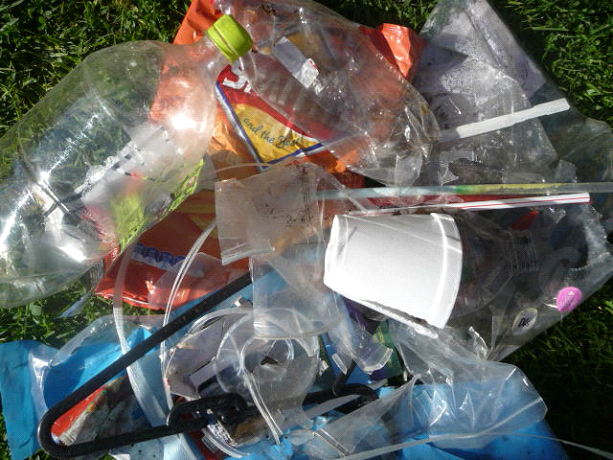 On the way home from the gym last week, a distance of about 1 km (1/2 mile), I counted the items of plastic litter on the curb as I walked. In that short distance I counted 63 pieces of plastic litter. Plastic drink bottles, bottle tops, candy wrappers, plastic film, polystyrene fragments etc. That seemed to be a lot to me. I guess it is a generational thing. Our parents would have been horrified to see that amount, whereas it seems to go unnoticed by our youth of today. In another 20 years how many pieces will there be on this stretch, -- 200? What will today’s youth think of that new amount then when they are older? Will their children be so readily accepting of a higher amount of litter?
 Toxic waste disaster: how greed and bad regulation allowed Graham White to distort the national market in waste. Australia
Posted on February 22, 2021 by DrRossH in Landfills and Disposal
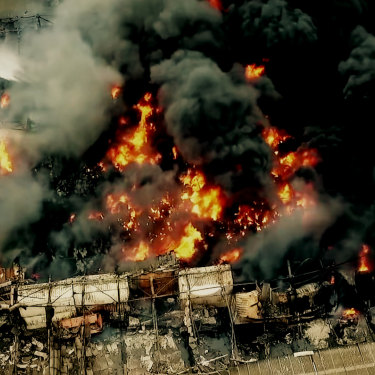
But five years on, we know the truth. Covered by a thin layer of topsoil were the pits that White had dug and that he was filling with toxic waste — millions of litres of chemicals and tonnes of asbestos-contaminated products brought by the truckload.
By the time the scheme was accidentally exposed in 2018, White and his associates at Bradbury Industrial Services had illicitly buried or stockpiled an estimated 50 million litres of highly flammable solvents and other toxic materials.
The failure to arrest this operation also laid the groundwork that sparked two of Melbourne’s worst-ever industrial fires.
This article shows how incompetent the government (all sides have been on waste issues). They didn’t want to know as it would have meant a huge problem to deal with. Now the tax payers are footing bills in the $100’s of millions and contaminated land like we have not seen before. Industry has gotten away with their products being illegally dumped, saying they didn’t know. This is not good enough, waste is a huge serious issue and companies producing waste need to be audited regularly and a trail of all waste paths needs to be followed and maintained. We can deal with waste , but it is going to cost money and rightly so. This article shows how bad it can be if people just close their eyes.


Discussion · No Comments
There are no responses to "Toxic waste disaster: how greed and bad regulation allowed Graham White to distort the national market in waste. Australia". Comments are closed for this post.Oops! Sorry, comments are closed at this time. Please try again later.