


 How many people today grab a takeaway coffee cup from the local cafe to drink on the go? We don’t know, but the number must be enormous.. Most every one of the above have a plastic top that will last 100s of years. Some cafes still use plastic cups that last a similar time. Is 10 minutes of coffee worth 100s of years of trash?
These items can be seen littering our gutters and on our streets all over the place. If they were all cardboard, they would still be littered, but they would, at least, be gone in a short time.
They do not need to be made of plastic.
How many people today grab a takeaway coffee cup from the local cafe to drink on the go? We don’t know, but the number must be enormous.. Most every one of the above have a plastic top that will last 100s of years. Some cafes still use plastic cups that last a similar time. Is 10 minutes of coffee worth 100s of years of trash?
These items can be seen littering our gutters and on our streets all over the place. If they were all cardboard, they would still be littered, but they would, at least, be gone in a short time.
They do not need to be made of plastic.
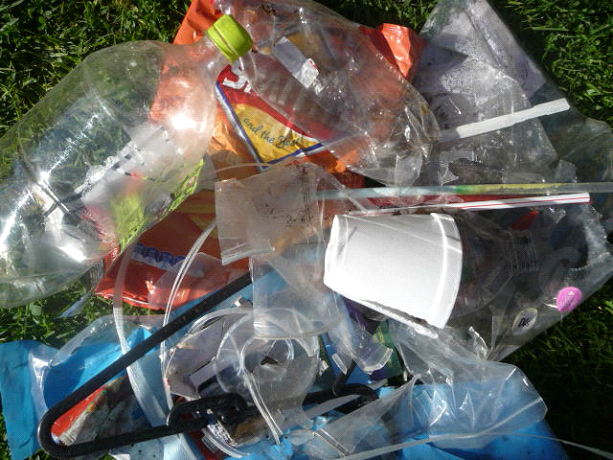 On the way home from the gym last week, a distance of about 1 km (1/2 mile), I counted the items of plastic litter on the curb as I walked. In that short distance I counted 63 pieces of plastic litter. Plastic drink bottles, bottle tops, candy wrappers, plastic film, polystyrene fragments etc. That seemed to be a lot to me. I guess it is a generational thing. Our parents would have been horrified to see that amount, whereas it seems to go unnoticed by our youth of today. In another 20 years how many pieces will there be on this stretch, -- 200? What will today’s youth think of that new amount then when they are older? Will their children be so readily accepting of a higher amount of litter?
 July 2021 - Page 2 of 2 - Plastic Waste Solutions
-
Western Australia’s Plan for Plastics bans single-use plastics – Australia
Posted on July 7, 2021 by DrRossH in Plastic Limiting RegulationsSource: Western Australia’s Plan for Plastics bans single-use plastics - Food & Beverage Industry News The Plan for Plastics has been fast-tracked by the Western Australian government by four years and will see single-use plastics including bowls, plates, cutlery, straws and...
Continue reading this entry → -
Plastics phase-out backed by Packaging Forum – Australia
Posted on July 6, 2021 by DrRossH in Plastic Limiting RegulationsSource: Plastics phase-out backed by Packaging Forum Phase-out timeline By late 2022: PVC meat trays PS (polystyrene) takeaway food and beverage packaging EPS (expanded polystyrene) food and beverage packaging (including meat trays) Degradable plastic products (eg, oxo-degradable) Plastic drink stirrers Plastic-stemmed...
Continue reading this entry → -
Tasmania to get three new plastic recycling facilities – Australia
Posted on July 5, 2021 by DrRossH in Plastic Waste NewsSource: Tasmania to get three new plastic recycling facilities | Australian Manufacturing Forum The facilities would reprocess 15,000 tonnes of plastic waste annually and receive a combined $20.3 million in federal support. Plastics at the three sites would be reprocessed into products including...
Continue reading this entry → -
Kenyan woman finds a way to recycle plastic waste into bricks that are stronger than concrete
Posted on July 2, 2021 by DrRossH in Plastic Waste NewsSource: Kenyan woman finds a way to recycle plastic waste into bricks that are stronger than concrete In 2017, Matee opened a factory in Nairobi called Gjenge Makers, where workers take plastic waste, mix it with sand, and heat it...
Continue reading this entry → -
Australia on the right path to tackling plastics
Posted on July 2, 2021 by DrRossH in Plastic Waste NewsMedia Release by WMRR 1 July 2021...
Continue reading this entry → -
Room to grow: generating energy from waste in Australia
Posted on July 2, 2021 by DrRossH in Landfills and DisposalSource: Room to grow: generating energy from waste in Australia In looking to Europe, we must also acknowledge that while the ambitious federal and state resource recovery targets are supported, evidence from numerous EU members (and other countries) that have...
Continue reading this entry → -
Coles closes the loop with product packaging – Australia
Posted on July 1, 2021 by DrRossH in Plastic Waste NewsOriginal article The Coles Group has released its full sustainability strategy announcing the complete removal of single-use plastics from its shelves and closing the loop by using recycled content on its product packaging. From tomorrow,...
Continue reading this entry → -
Ban on mixed plastic waste exports comes into effect today – Australia
Posted on July 1, 2021 by DrRossH in Plastic Limiting RegulationsSource: Ban on mixed plastic waste exports comes into effect today - Inside Waste Industry leaders have confirmed they are ready for the next step of a staged series of export bans that will see a transformation of Australia’s recycling...
Continue reading this entry →