


 How many people today grab a takeaway coffee cup from the local cafe to drink on the go? We don’t know, but the number must be enormous.. Most every one of the above have a plastic top that will last 100s of years. Some cafes still use plastic cups that last a similar time. Is 10 minutes of coffee worth 100s of years of trash?
These items can be seen littering our gutters and on our streets all over the place. If they were all cardboard, they would still be littered, but they would, at least, be gone in a short time.
They do not need to be made of plastic.
How many people today grab a takeaway coffee cup from the local cafe to drink on the go? We don’t know, but the number must be enormous.. Most every one of the above have a plastic top that will last 100s of years. Some cafes still use plastic cups that last a similar time. Is 10 minutes of coffee worth 100s of years of trash?
These items can be seen littering our gutters and on our streets all over the place. If they were all cardboard, they would still be littered, but they would, at least, be gone in a short time.
They do not need to be made of plastic.
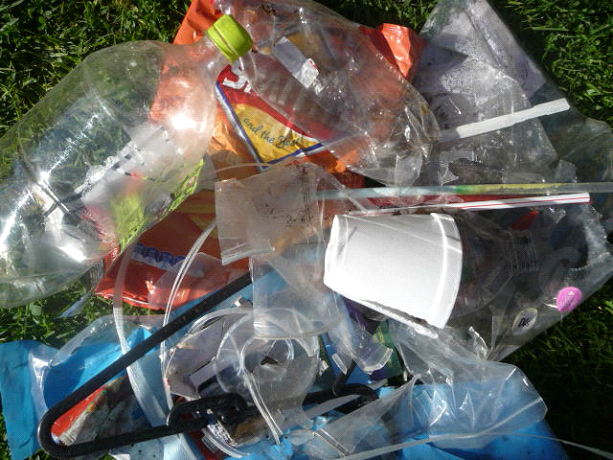 On the way home from the gym last week, a distance of about 1 km (1/2 mile), I counted the items of plastic litter on the curb as I walked. In that short distance I counted 63 pieces of plastic litter. Plastic drink bottles, bottle tops, candy wrappers, plastic film, polystyrene fragments etc. That seemed to be a lot to me. I guess it is a generational thing. Our parents would have been horrified to see that amount, whereas it seems to go unnoticed by our youth of today. In another 20 years how many pieces will there be on this stretch, -- 200? What will today’s youth think of that new amount then when they are older? Will their children be so readily accepting of a higher amount of litter?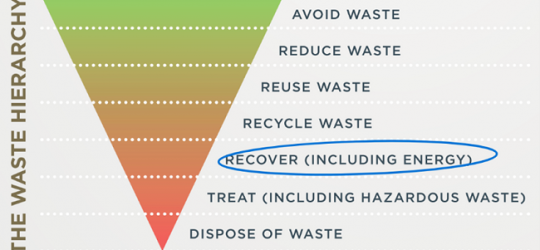
Room to grow: generating energy from waste in Australia
Posted on July 2, 2021 by DrRossH in Landfills and DisposalSource: Room to grow: generating energy from waste in Australia
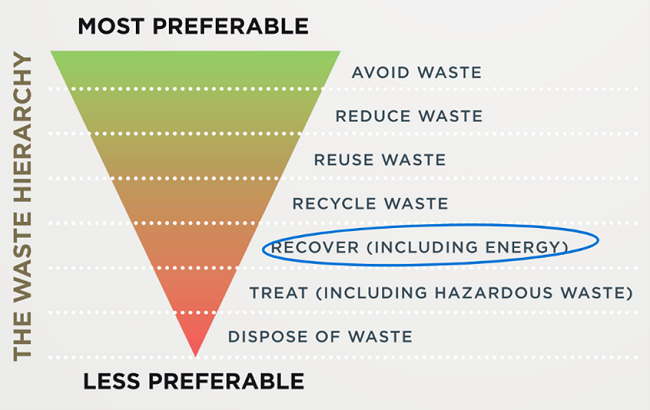
In looking to Europe, we must also acknowledge that while the ambitious federal and state resource recovery targets are supported, evidence from numerous EU members (and other countries) that have established decades-long WARR systems (that Australia does not have) show that consistently hitting the 70% target has not been achieved to-date. For example, during the period of 2010 to 2016, landfilling in the28 EU member states decreased from 29% to 25%. Meanwhile, municipal waste recycling rates differ widely between European countries, ranging from 68% in Germany to 0.3 % in Serbia in 2017. That said, smart, longer-term planning that considers the national 2030 80% recovery target is imperative to future-proof EfW facilities while protecting longer-term net-zero and circular economy goals. Such an approach is incumbent on the states and territories adopting comprehensive material management strategies that incorporate the entire hierarchy rather than enforcing arbitrary caps or limits on EfW that will simply deter investors – and thereby further entrench unsustainable landfilling habits!


Discussion · No Comments
There are no responses to "Room to grow: generating energy from waste in Australia". Comments are closed for this post.Oops! Sorry, comments are closed at this time. Please try again later.