


 How many people today grab a takeaway coffee cup from the local cafe to drink on the go? We don’t know, but the number must be enormous.. Most every one of the above have a plastic top that will last 100s of years. Some cafes still use plastic cups that last a similar time. Is 10 minutes of coffee worth 100s of years of trash?
These items can be seen littering our gutters and on our streets all over the place. If they were all cardboard, they would still be littered, but they would, at least, be gone in a short time.
They do not need to be made of plastic.
How many people today grab a takeaway coffee cup from the local cafe to drink on the go? We don’t know, but the number must be enormous.. Most every one of the above have a plastic top that will last 100s of years. Some cafes still use plastic cups that last a similar time. Is 10 minutes of coffee worth 100s of years of trash?
These items can be seen littering our gutters and on our streets all over the place. If they were all cardboard, they would still be littered, but they would, at least, be gone in a short time.
They do not need to be made of plastic.
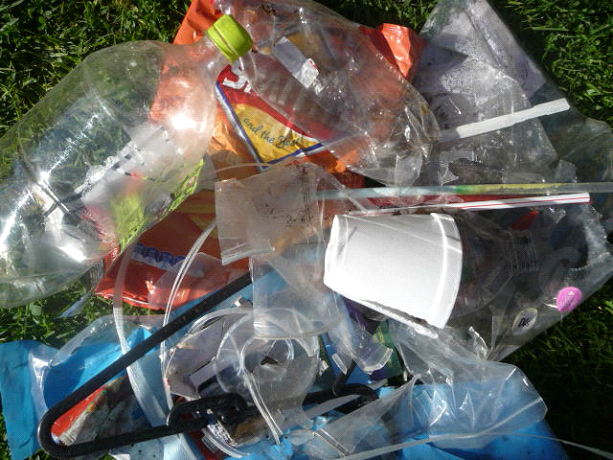 On the way home from the gym last week, a distance of about 1 km (1/2 mile), I counted the items of plastic litter on the curb as I walked. In that short distance I counted 63 pieces of plastic litter. Plastic drink bottles, bottle tops, candy wrappers, plastic film, polystyrene fragments etc. That seemed to be a lot to me. I guess it is a generational thing. Our parents would have been horrified to see that amount, whereas it seems to go unnoticed by our youth of today. In another 20 years how many pieces will there be on this stretch, -- 200? What will today’s youth think of that new amount then when they are older? Will their children be so readily accepting of a higher amount of litter?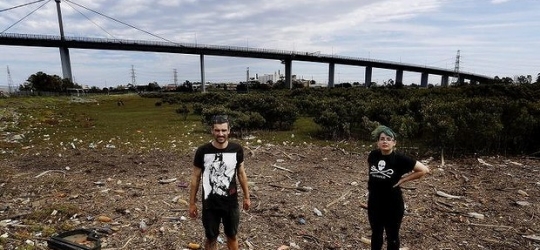
Clean-up volunteers tackle largely plastic pollution on Melbourne’s beaches- Australia
Posted on October 8, 2014 by DrRossH in Environmental Plastic Suppliers
 Clean-up volunteers tackle largely plastic pollution on Melbourne’s beaches.
Ignorance has just become much harder, for citizens, industry and policymakers alike: CSIRO has released the damning results of a three-year study of marine debris around Australia’s coastline and seas. Three-quarters of all the refuse is plastic, and almost all of that comes in small pieces. In Australian waters, it found up to 40,000 pieces of plastic per square kilometre.
The report states that “plastic production rates are intensifying” and “the volume of refuse humans release into marine systems is growing at an exponential rate”. Dr Denise Hardesty, the study’s lead author, says plastic has devastating effects on wildlife. She estimates that in the past few years, between 5000 and 15,000 turtles have been ensnared in abandoned fishing nets in the Gulf of Carpentaria alone.
Nearly half of all seabirds have plastic in their guts; by mid-century it will be 95 per cent.
Thanks to the Age news paper for writing this article and making this problem known more mainstream.


Discussion · No Comments
There are no responses to "Clean-up volunteers tackle largely plastic pollution on Melbourne’s beaches- Australia". Comments are closed for this post.Oops! Sorry, comments are closed at this time. Please try again later.