


 How many people today grab a takeaway coffee cup from the local cafe to drink on the go? We don’t know, but the number must be enormous.. Most every one of the above have a plastic top that will last 100s of years. Some cafes still use plastic cups that last a similar time. Is 10 minutes of coffee worth 100s of years of trash?
These items can be seen littering our gutters and on our streets all over the place. If they were all cardboard, they would still be littered, but they would, at least, be gone in a short time.
They do not need to be made of plastic.
How many people today grab a takeaway coffee cup from the local cafe to drink on the go? We don’t know, but the number must be enormous.. Most every one of the above have a plastic top that will last 100s of years. Some cafes still use plastic cups that last a similar time. Is 10 minutes of coffee worth 100s of years of trash?
These items can be seen littering our gutters and on our streets all over the place. If they were all cardboard, they would still be littered, but they would, at least, be gone in a short time.
They do not need to be made of plastic.
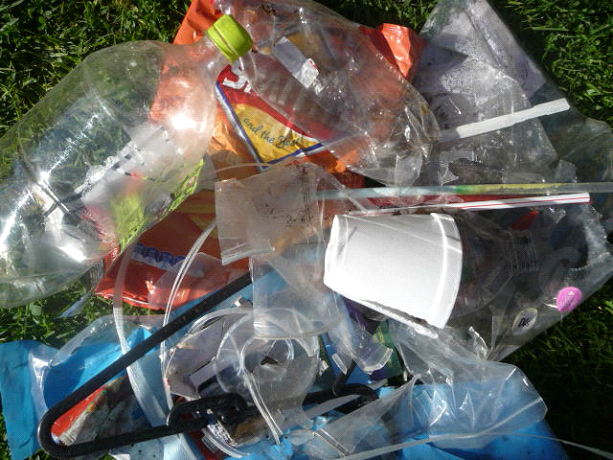 On the way home from the gym last week, a distance of about 1 km (1/2 mile), I counted the items of plastic litter on the curb as I walked. In that short distance I counted 63 pieces of plastic litter. Plastic drink bottles, bottle tops, candy wrappers, plastic film, polystyrene fragments etc. That seemed to be a lot to me. I guess it is a generational thing. Our parents would have been horrified to see that amount, whereas it seems to go unnoticed by our youth of today. In another 20 years how many pieces will there be on this stretch, -- 200? What will today’s youth think of that new amount then when they are older? Will their children be so readily accepting of a higher amount of litter?
Plastic fruit sticker example of what is wrong – Australia
Posted on May 24, 2022 by DrRossH in Plastic Limiting Regulations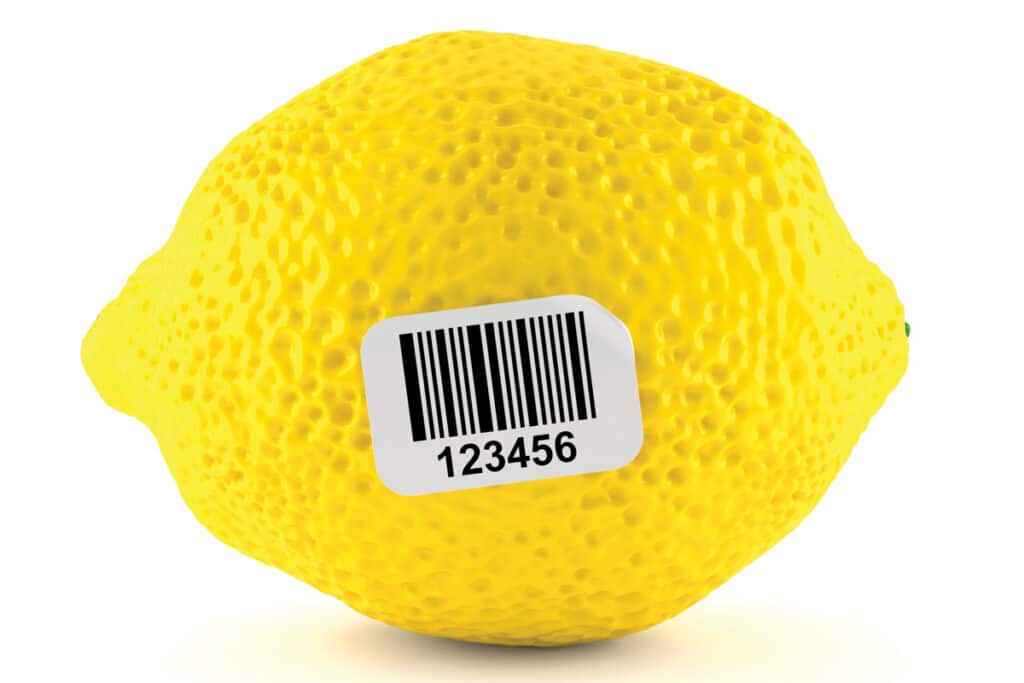
Would the maniac who designed the first plastic fruit sticker please stand up! Why is it that every banana, orange, apple, kiwi fruit, and other piece of fruit you buy now comes with a plastic sticker attached to it?
I get that in some cases it improves scanning at the checkout, but why plastic? It is ridiculous that these are not made out of wax-proof paper, or corn starch, or some other material that can be readily composted in a household compost bin or a standard industrial composting facility.
Their current fate is to contaminate household food and garden (FOGO) collection services, industrial composting and every backyard compost bin in Australia.
It astounds me that EPAs have not jumped straight onto this issue and regulated it out of existence.
If my clients pollute the environment with plastic, the EPA issues a ‘stop work’ notice and my client is prevented from continuing until the pollution is remediated and the process improved.
Why do we tolerate commercial scale pollution in the form of plastic fruit stickers (and polystyrene beads, balloons, non-compostable wet wipes, and the like) when there are clear alternative single options which do not cause environmental harm?
I give credit to the national waste action plan and the commitment by state governments to start banning single-use plastic, including the aforementioned polystyrene beads.
But the list needs to be expanded and the pace of reform massively accelerated.
I am not arguing that such plastics are the main cause of environmental harm to the planet, but they are a contributor to pollution and there are clear alternative options. It is the ease with which they could be substituted for compostable versions of the same thing, that frustrates me. It is so easy to fix, but only EPA’s can do it. I can’t. You can’t. Governments, and EPAs specifically, can.
It should be a simple decision by the appropriate Minister to put them on a list, giving proponents say six months to produce an alternative version, which does not cause environmental harm, or they are banned. Simple.
It amazes me that in the era of circular economy, climate change, plastic action plans and so forth, there is no state in Australia with legislation focussed on the end-of-life fate of products.
We have a plethora of regulations around things like product safety and occupational health, yet there are currently no regulations in Australia requiring consideration of the end-of-life fate of products including their recyclability or the pollution that they may cause.
Fruit stickers are just one obvious example of a failing regulatory system. So are non-degradeable wet wipes.
In the interest of free markets, we are failing to prioritise environmental protection, even where there are simple, environmentally sustainable alternatives available. That is very frustrating.
(Postscript – the NSW EPA is preparing to ban plastic fruit stickers in the next round of regulatory reform. Minister Kean – more power to you. All states should do the same.)


Discussion · No Comments
There are no responses to "Plastic fruit sticker example of what is wrong – Australia". Comments are closed for this post.Oops! Sorry, comments are closed at this time. Please try again later.