


 How many people today grab a takeaway coffee cup from the local cafe to drink on the go? We don’t know, but the number must be enormous.. Most every one of the above have a plastic top that will last 100s of years. Some cafes still use plastic cups that last a similar time. Is 10 minutes of coffee worth 100s of years of trash?
These items can be seen littering our gutters and on our streets all over the place. If they were all cardboard, they would still be littered, but they would, at least, be gone in a short time.
They do not need to be made of plastic.
How many people today grab a takeaway coffee cup from the local cafe to drink on the go? We don’t know, but the number must be enormous.. Most every one of the above have a plastic top that will last 100s of years. Some cafes still use plastic cups that last a similar time. Is 10 minutes of coffee worth 100s of years of trash?
These items can be seen littering our gutters and on our streets all over the place. If they were all cardboard, they would still be littered, but they would, at least, be gone in a short time.
They do not need to be made of plastic.
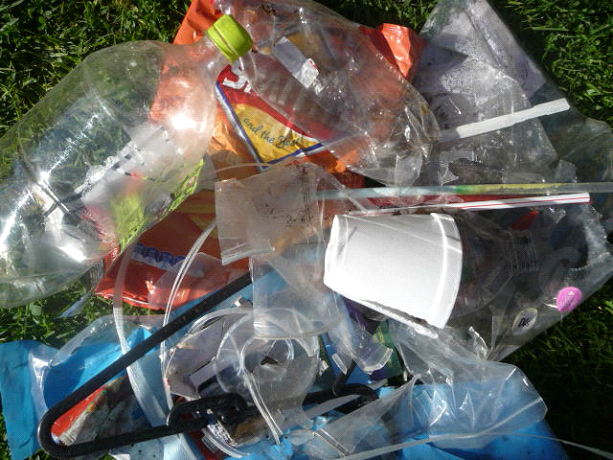 On the way home from the gym last week, a distance of about 1 km (1/2 mile), I counted the items of plastic litter on the curb as I walked. In that short distance I counted 63 pieces of plastic litter. Plastic drink bottles, bottle tops, candy wrappers, plastic film, polystyrene fragments etc. That seemed to be a lot to me. I guess it is a generational thing. Our parents would have been horrified to see that amount, whereas it seems to go unnoticed by our youth of today. In another 20 years how many pieces will there be on this stretch, -- 200? What will today’s youth think of that new amount then when they are older? Will their children be so readily accepting of a higher amount of litter?
Trash Talk: Incineration vs. the Circular Economy
Posted on May 16, 2017 by DrRossH in Landfills and Disposal
Trash talk: it’s something that has become synonymous with overzealous drunken sports fans or reality T.V. starlets vying over the attention of a solitary eligible Bachelor. With that kind of competition, it’s easy to understand why literally t […]
Source: Trash Talk: Incineration vs. the Circular Economy
We can see this disparity quite clearly throughout Europe. In Copenhagen, where WtE is greatly utilized, 60% of waste is considered non-recyclable, whereas in Treviso, a city that separates 85% of their waste for recycling, the figure goes down to 15%. From this we can gather that what is actually non-recyclable waste is somewhere between 10-15% of what we produce, in weight that would be about 50 kg per European per year.
Europe’s incineration capacity is up to 81 million metric tons per year.
If all Europeans were to recycle the way they do in Copenhagen today we would need to more than double the incineration (221Mt) capacity in Europe –provided of course that we want to burn all the residual waste which is not realistic.
But if all the Europeans recycle the way they do in Treviso today we would need to cut current capacity 3 times down to 25Mt of incineration capacity.
Are we big enough to tackle such a problem with only long term benefits? Putting partial responsibility of manufactured products on to the manufacturer would ensure that recycling rates would rise considerably and the efficiency rates of recycling would also rise considerably. If we could do that then the case of WtE may be less compelling. But while we have manufacturers able to produce anything they want with no responsibility of the consequences, we will have a huge waste problem.


Discussion · No Comments
There are no responses to "Trash Talk: Incineration vs. the Circular Economy". Comments are closed for this post.Oops! Sorry, comments are closed at this time. Please try again later.