


 How many people today grab a takeaway coffee cup from the local cafe to drink on the go? We don’t know, but the number must be enormous.. Most every one of the above have a plastic top that will last 100s of years. Some cafes still use plastic cups that last a similar time. Is 10 minutes of coffee worth 100s of years of trash?
These items can be seen littering our gutters and on our streets all over the place. If they were all cardboard, they would still be littered, but they would, at least, be gone in a short time.
They do not need to be made of plastic.
How many people today grab a takeaway coffee cup from the local cafe to drink on the go? We don’t know, but the number must be enormous.. Most every one of the above have a plastic top that will last 100s of years. Some cafes still use plastic cups that last a similar time. Is 10 minutes of coffee worth 100s of years of trash?
These items can be seen littering our gutters and on our streets all over the place. If they were all cardboard, they would still be littered, but they would, at least, be gone in a short time.
They do not need to be made of plastic.
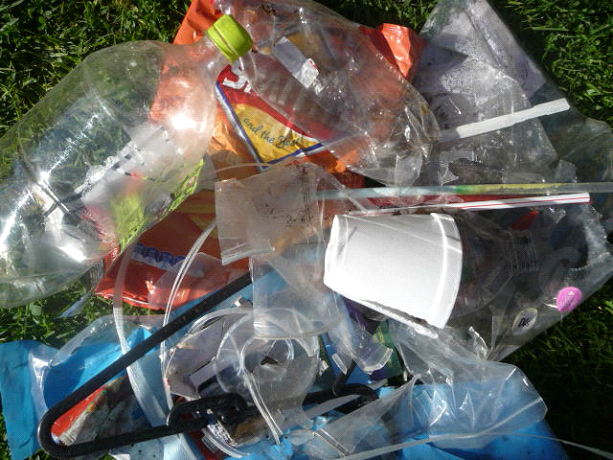 On the way home from the gym last week, a distance of about 1 km (1/2 mile), I counted the items of plastic litter on the curb as I walked. In that short distance I counted 63 pieces of plastic litter. Plastic drink bottles, bottle tops, candy wrappers, plastic film, polystyrene fragments etc. That seemed to be a lot to me. I guess it is a generational thing. Our parents would have been horrified to see that amount, whereas it seems to go unnoticed by our youth of today. In another 20 years how many pieces will there be on this stretch, -- 200? What will today’s youth think of that new amount then when they are older? Will their children be so readily accepting of a higher amount of litter?
 September 2020 - Plastic Waste Solutions
-
How Do Microplastics Affect Soil Species? Pollution Solutions Online
Posted on September 23, 2020 by DrRossH in Plastic Waste NewsSource: How Do Microplastics Affect Soil Species? Pollution Solutions Online Microplastic pollution may be having a devastating impact on mites, springworms, ringtails and other microscopic organisms which live in soil. Although these tiny creatures are all but invisible to the...
Continue reading this entry → -
Pandemic pause of our war on waste
Posted on September 22, 2020 by DrRossH in Plastic Waste NewsSource: Pandemic pause of our war on waste In less than a year, COVID-19 has turned our world upside down. As we all contended with the unfamiliarity that came from living in a new normal, the war on plastic took...
Continue reading this entry → -
Nestlé’s soft plastic recycling trial to begin on NSW Central Coast – Australia
Posted on September 10, 2020 by DrRossH in Plastic Waste NewsSource: Nestlé's soft plastic recycling trial to begin on NSW Central Coast Since soft plastics make up 30% of the plastic packaging used in Australia, food giant Nestlé wanted to be part of finding new approaches to boost recycling. In...
Continue reading this entry →