


 How many people today grab a takeaway coffee cup from the local cafe to drink on the go? We don’t know, but the number must be enormous.. Most every one of the above have a plastic top that will last 100s of years. Some cafes still use plastic cups that last a similar time. Is 10 minutes of coffee worth 100s of years of trash?
These items can be seen littering our gutters and on our streets all over the place. If they were all cardboard, they would still be littered, but they would, at least, be gone in a short time.
They do not need to be made of plastic.
How many people today grab a takeaway coffee cup from the local cafe to drink on the go? We don’t know, but the number must be enormous.. Most every one of the above have a plastic top that will last 100s of years. Some cafes still use plastic cups that last a similar time. Is 10 minutes of coffee worth 100s of years of trash?
These items can be seen littering our gutters and on our streets all over the place. If they were all cardboard, they would still be littered, but they would, at least, be gone in a short time.
They do not need to be made of plastic.
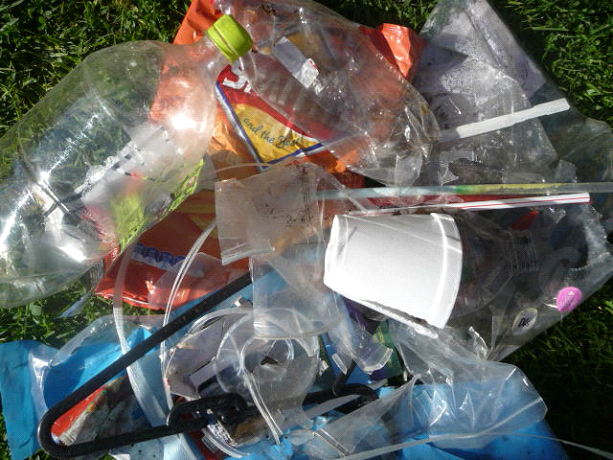 On the way home from the gym last week, a distance of about 1 km (1/2 mile), I counted the items of plastic litter on the curb as I walked. In that short distance I counted 63 pieces of plastic litter. Plastic drink bottles, bottle tops, candy wrappers, plastic film, polystyrene fragments etc. That seemed to be a lot to me. I guess it is a generational thing. Our parents would have been horrified to see that amount, whereas it seems to go unnoticed by our youth of today. In another 20 years how many pieces will there be on this stretch, -- 200? What will today’s youth think of that new amount then when they are older? Will their children be so readily accepting of a higher amount of litter?
 September 2012 - Plastic Waste Solutions
-
Bag ban returns in Homer, Alaska
Posted on September 30, 2012 by DrRossH in Plastic Limiting RegulationsPlastics News - Bag ban returns in Homer, Alaska. The ban on single-use disposable plastic carryout bags is back on in Homer, Alaska. Homer City Council voted Sept .24 to override a veto of the bill by Mayor James Hornaday. That...
Continue reading this entry → -
Brookline mulls ban on Styrofoam, plastic bags – Boston
Posted on September 30, 2012 by DrRossH in Plastic Limiting RegulationsBrookline mulls ban on Styrofoam, plastic bags - West - The Boston Globe. A cup of coffee served at a Dunkin’ Donuts in Great Barrington earlier this year could soon lead to a ban on plastic-foam food and beverage containers in...
Continue reading this entry → -
What happens after we get charged for a Plastic Bag?
Posted on September 29, 2012 by DrRossH in Plastic Limiting RegulationsEcho letter: What happens after we get charged? | This is Gloucestershire. This is the exact type of naiveness that we need to get over. Stop thinking about our own selves for a few...
Continue reading this entry → -
Defra must deliver on PRN reforms, says BPF
Posted on September 29, 2012 by DrRossH in Plastic Waste NewsPlastics & Rubber Weekly - Defra must deliver on PRN reforms, says BPF. The British Plastics Federation's (BPF) recycling group has written to Defra junior minister Richard Benyon, about the urgent need to reform the PRN system. “With the recent ministerial...
Continue reading this entry → -
Lib Dem conference backs UK carrier bag tax
Posted on September 29, 2012 by DrRossH in Plastic Limiting RegulationsPlastics & Rubber Weekly - Lib Dem conference backs UK carrier bag tax. What a huge environmental benefit it would be for the UK if they started charging for plastic bags.
Continue reading this entry → -
Time to be more Critical of our Use of Plastics
Posted on September 29, 2012 by DrRossH in Plastic Waste NewsTime to be more critical "But the time has come to be more critical of our use of plastics" Continue reading this entry →
-
Calif. cracks down on illegal bottle, e-waste redemptions
Posted on September 29, 2012 by DrRossH in Plastic Waste NewsPlastics News - Calif. cracks down on illegal bottle, e-waste redemptions. “California’s successful Bottle Bill Program is creating green jobs while protecting the environment by encouraging recycling
Continue reading this entry → -
Expanding recycling will require a local approach
Posted on September 29, 2012 by DrRossH in Plastic Waste NewsPlastics News - Expanding recycling will require a local approach. Future increases in recycling materials will come from local and state initiatives, possibly in the form of extended producer responsibility (EPR) initiatives -- and not from nationwide endeavors. And for recycling...
Continue reading this entry → -
Marketers go green, but fewer consumers willing to pay
Posted on September 29, 2012 by DrRossH in Plastic Waste NewsPlastics News - Marketers go green, but fewer consumers willing to pay. However sad the underlying fact in the article is, it is true that there is so much hype out there about green products and little to no regulation...
Continue reading this entry → -
Partnership helps Coke push ahead with plant-based PET
Posted on September 29, 2012 by DrRossH in Plastic Waste NewsPlastics News - Partnership helps Coke push ahead with plant-based PET. People need to know that this is partially a greenwashing sham. A plastic bottle made from plants is still a plastic bottle, with a greenwashed label. The Plant bottle...
Continue reading this entry →