


 How many people today grab a takeaway coffee cup from the local cafe to drink on the go? We don’t know, but the number must be enormous.. Most every one of the above have a plastic top that will last 100s of years. Some cafes still use plastic cups that last a similar time. Is 10 minutes of coffee worth 100s of years of trash?
These items can be seen littering our gutters and on our streets all over the place. If they were all cardboard, they would still be littered, but they would, at least, be gone in a short time.
They do not need to be made of plastic.
How many people today grab a takeaway coffee cup from the local cafe to drink on the go? We don’t know, but the number must be enormous.. Most every one of the above have a plastic top that will last 100s of years. Some cafes still use plastic cups that last a similar time. Is 10 minutes of coffee worth 100s of years of trash?
These items can be seen littering our gutters and on our streets all over the place. If they were all cardboard, they would still be littered, but they would, at least, be gone in a short time.
They do not need to be made of plastic.
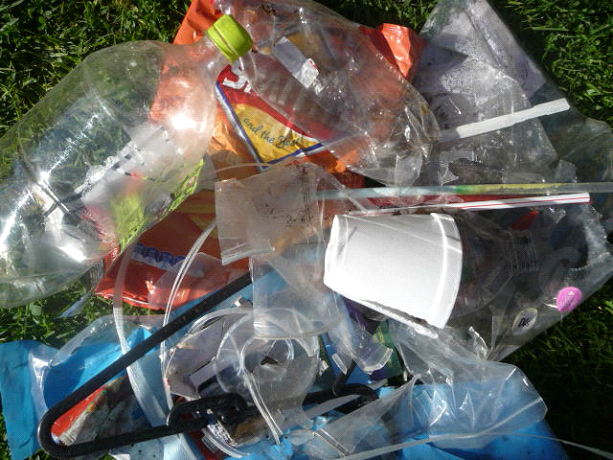 On the way home from the gym last week, a distance of about 1 km (1/2 mile), I counted the items of plastic litter on the curb as I walked. In that short distance I counted 63 pieces of plastic litter. Plastic drink bottles, bottle tops, candy wrappers, plastic film, polystyrene fragments etc. That seemed to be a lot to me. I guess it is a generational thing. Our parents would have been horrified to see that amount, whereas it seems to go unnoticed by our youth of today. In another 20 years how many pieces will there be on this stretch, -- 200? What will today’s youth think of that new amount then when they are older? Will their children be so readily accepting of a higher amount of litter?
 October 2014 - Plastic Waste Solutions
-
Western Europe’s Experience with Refillable Beverage Containers | Reduce, Reuse, Refill!
Posted on October 20, 2014 by DrRossH in Plastic & Wildlife, Plastic Waste NewsWestern Europe's Experience with Refillable Beverage Containers | Reduce, Reuse, Refill!. In spite of the high prevalence of refillable beverage containers in many countries, refilling has been slowly declining across Europe. In 1997, 41 percent by volume of the mineral...
Continue reading this entry → -
CCE study finds support for profit with sustainability- UK
Posted on October 12, 2014 by DrRossH in GeneralCCE study finds support for profit with sustainability | Packaging News. Around nine in 10 current chief executives and future business leaders believe businesses should have a social purpose according to a new study by Coca-Cola Enterprises (CCE) But while 86%...
Continue reading this entry → -
Concerns over microplastics in the food chain – Australia
Posted on October 12, 2014 by DrRossH in Plastic Waste NewsConcerns over microplastics in the food chain | SBS News. The so-called micro plastics are increasingly making their way into water supplies, sparking concerns they may travel up the foodchain to humans. It's hard to complete your grocery shopping these days...
Continue reading this entry → -
Plastics, human health and environmental impacts: The road ahead Journalist’s Resource: Research for Reporting, from Harvard Shorenstein Center
Posted on October 12, 2014 by DrRossH in Plastic Waste NewsPlastics, human health and environmental impacts: The road ahead Journalist's Resource: Research for Reporting, from Harvard Shorenstein Center. Because of the omnipresence of plastics, the complexity of the substances that they release into the environment and the potential interaction of...
Continue reading this entry → -

Clean-up volunteers tackle largely plastic pollution on Melbourne’s beaches- Australia
Posted on October 8, 2014 by DrRossH in Environmental Plastic SuppliersClean-up volunteers tackle largely plastic pollution on Melbourne's beaches. Ignorance has just become much harder, for citizens, industry and policymakers alike: CSIRO has released the damning results of a three-year study of marine debris around Australia's coastline and...
Continue reading this entry → -
Good Question: Why Do We Use So Much Plastic? – USA
Posted on October 1, 2014 by DrRossH in Plastic Limiting Regulations, Plastic Waste NewsGood Question: Why Do We Use So Much Plastic? « CBS Minnesota. Most people do not know the problems with plastic and even worse they do not really want to know. It is easier to keep you head in the...
Continue reading this entry → -
California first U.S. state to ban plastic bags – Sep. 30, 2014
Posted on October 1, 2014 by DrRossH in Plastic Limiting RegulationsCalifornia first U.S. state to ban plastic bags - Sep. 30, 2014. Yes, a sign of things to come. We need a lot more places now to ban these unnecessary blights on our environments.
Continue reading this entry →