


 How many people today grab a takeaway coffee cup from the local cafe to drink on the go? We don’t know, but the number must be enormous.. Most every one of the above have a plastic top that will last 100s of years. Some cafes still use plastic cups that last a similar time. Is 10 minutes of coffee worth 100s of years of trash?
These items can be seen littering our gutters and on our streets all over the place. If they were all cardboard, they would still be littered, but they would, at least, be gone in a short time.
They do not need to be made of plastic.
How many people today grab a takeaway coffee cup from the local cafe to drink on the go? We don’t know, but the number must be enormous.. Most every one of the above have a plastic top that will last 100s of years. Some cafes still use plastic cups that last a similar time. Is 10 minutes of coffee worth 100s of years of trash?
These items can be seen littering our gutters and on our streets all over the place. If they were all cardboard, they would still be littered, but they would, at least, be gone in a short time.
They do not need to be made of plastic.
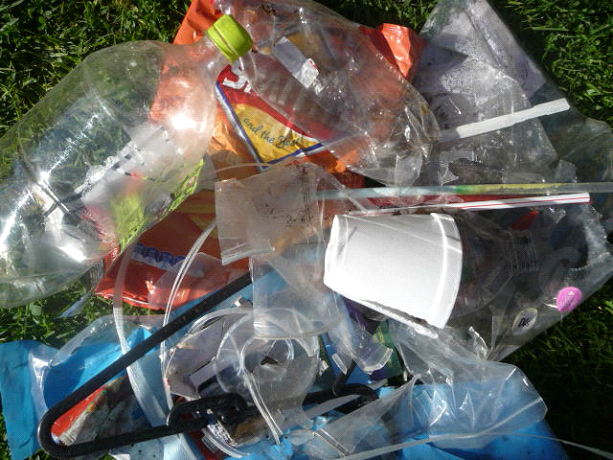 On the way home from the gym last week, a distance of about 1 km (1/2 mile), I counted the items of plastic litter on the curb as I walked. In that short distance I counted 63 pieces of plastic litter. Plastic drink bottles, bottle tops, candy wrappers, plastic film, polystyrene fragments etc. That seemed to be a lot to me. I guess it is a generational thing. Our parents would have been horrified to see that amount, whereas it seems to go unnoticed by our youth of today. In another 20 years how many pieces will there be on this stretch, -- 200? What will today’s youth think of that new amount then when they are older? Will their children be so readily accepting of a higher amount of litter?
 Biodegradable plastics: the way ahead – India
Posted on June 7, 2013 by DrRossH in Plastic Waste NewsBiodegradable plastics: the way ahead | Business Standard.
The above article was many errors in it. When talks about biodegradable plastic are made there has to be clear distinction made between how and where the biodegradation will occur. Oxo or photodegradable plastics are degradable, not biodegradable. Degradable is the breakdown by a chemical reaction into small plastic fragments. Biodegradable is a biological process whereby naturally occurring microorganisms digest the plastic. Two very different process and often confused by people who do not understand. Oxo degradable is nothing to do with biodegradable. Oxo degradation will only occur for a littered item on the ground in sunlight over a couple of years. No one should encourage leaving litter around for a couple of years. Oxo degradable is not mainstream recyclable either. To dispose of an oxodegradable product requires for it to be incinerated in reality.
Compostable plastics are plastics that do biodegrade but only under specific conditions maintained in a commercial compost facility. If those conditions are not met, the plastic will not biodegrade. Since very few people in the world have access to a commercial compost facility, then compostable plastic is of little benefit to anyone.
There are additives called landfill biodegradable that when added to a plastic will allow the plastic to biodegrade over a few years in a landfill. These additives seem to have the most merit for the elimination of plastic waste accumulation in a landfill. They do nothing to address the litter of plastic.


Discussion · No Comments
There are no responses to "Biodegradable plastics: the way ahead – India". Comments are closed for this post.Oops! Sorry, comments are closed at this time. Please try again later.