


 How many people today grab a takeaway coffee cup from the local cafe to drink on the go? We don’t know, but the number must be enormous.. Most every one of the above have a plastic top that will last 100s of years. Some cafes still use plastic cups that last a similar time. Is 10 minutes of coffee worth 100s of years of trash?
These items can be seen littering our gutters and on our streets all over the place. If they were all cardboard, they would still be littered, but they would, at least, be gone in a short time.
They do not need to be made of plastic.
How many people today grab a takeaway coffee cup from the local cafe to drink on the go? We don’t know, but the number must be enormous.. Most every one of the above have a plastic top that will last 100s of years. Some cafes still use plastic cups that last a similar time. Is 10 minutes of coffee worth 100s of years of trash?
These items can be seen littering our gutters and on our streets all over the place. If they were all cardboard, they would still be littered, but they would, at least, be gone in a short time.
They do not need to be made of plastic.
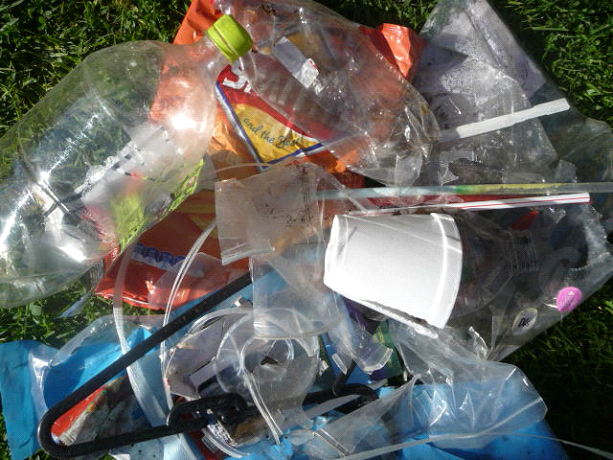 On the way home from the gym last week, a distance of about 1 km (1/2 mile), I counted the items of plastic litter on the curb as I walked. In that short distance I counted 63 pieces of plastic litter. Plastic drink bottles, bottle tops, candy wrappers, plastic film, polystyrene fragments etc. That seemed to be a lot to me. I guess it is a generational thing. Our parents would have been horrified to see that amount, whereas it seems to go unnoticed by our youth of today. In another 20 years how many pieces will there be on this stretch, -- 200? What will today’s youth think of that new amount then when they are older? Will their children be so readily accepting of a higher amount of litter?
 Connecticut AG probes recycling claims on HDPE toothpaste tubes – USA
Posted on September 22, 2023 by DrRossH in Plastic RecyclingA complaint over green marketing labels on HDPE toothpaste tubes could be test for what constitutes improper recyclability claims, a watchdog group says.
Source: Connecticut AG probes recycling claims on HDPE toothpaste tubes | Plastics News
This is a good article that presents the case of Technically Recyclable vs practically being recycled.
In its most recent sustainability report, Colgate said that other brands have also pledged to move to recyclable tubes by 2025, claiming that “at least 75 percent of the 20 billion toothpaste tubes that are used annually will become recyclable.”
“Our goal is to transition the remainder of our toothpaste portfolio to the recyclable tubes in the U.S. by 2023 and by 2025 globally,” the company said. “We are making significant progress in our efforts to transform the toothpaste category and, so far, have shared our tube technology by holding over 70 sessions with the packaging industry, NGOs and other consumer product companies.”
But Truth in Advertising said that Colgate is using a “theoretical or technical” definition of recyclability to support its marketing claims and is ignoring on-the-ground realties.
In its filing, it presented statements from the three largest waste management and recycling haulers in the U.S. — Waste Management Inc., Republic Services Inc. and Waste Connections — that they do not currently accept tubes for recycling. Those companies operate more than 60 percent of the materials recovery facilities in the U.S., the group said.
As well, it noted comments from the private waste industry’s main trade group at a May 23 FTC hearing on recyclability claims that until all toothpaste tubes are recyclable, those materials recovery facilities must consider any tubes a contaminant.
“That toothpaste tube, while the plastic might be recyclable, because of the shape, it’s not going to make it through our systems,” a representative from the National Waste & Recycling Association told FTC. “It will be looked at as contaminant, and it’ll be removed by the workers on the line because they don’t have a lot of time, they’re pulling out contaminants, and there’s a conveyor belt going by superfast.


Discussion · No Comments
There are no responses to "Connecticut AG probes recycling claims on HDPE toothpaste tubes – USA". Comments are closed for this post.Oops! Sorry, comments are closed at this time. Please try again later.