


 How many people today grab a takeaway coffee cup from the local cafe to drink on the go? We don’t know, but the number must be enormous.. Most every one of the above have a plastic top that will last 100s of years. Some cafes still use plastic cups that last a similar time. Is 10 minutes of coffee worth 100s of years of trash?
These items can be seen littering our gutters and on our streets all over the place. If they were all cardboard, they would still be littered, but they would, at least, be gone in a short time.
They do not need to be made of plastic.
How many people today grab a takeaway coffee cup from the local cafe to drink on the go? We don’t know, but the number must be enormous.. Most every one of the above have a plastic top that will last 100s of years. Some cafes still use plastic cups that last a similar time. Is 10 minutes of coffee worth 100s of years of trash?
These items can be seen littering our gutters and on our streets all over the place. If they were all cardboard, they would still be littered, but they would, at least, be gone in a short time.
They do not need to be made of plastic.
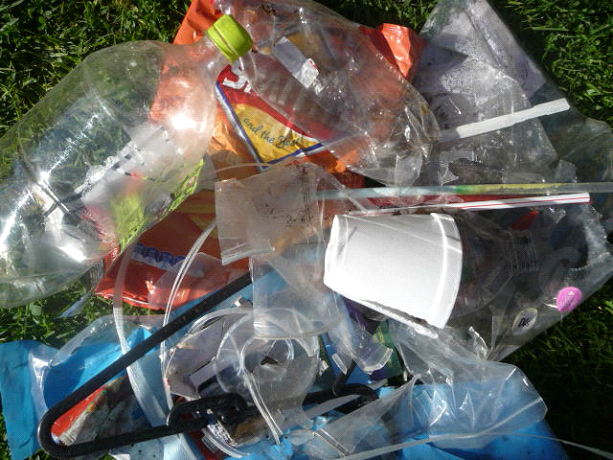 On the way home from the gym last week, a distance of about 1 km (1/2 mile), I counted the items of plastic litter on the curb as I walked. In that short distance I counted 63 pieces of plastic litter. Plastic drink bottles, bottle tops, candy wrappers, plastic film, polystyrene fragments etc. That seemed to be a lot to me. I guess it is a generational thing. Our parents would have been horrified to see that amount, whereas it seems to go unnoticed by our youth of today. In another 20 years how many pieces will there be on this stretch, -- 200? What will today’s youth think of that new amount then when they are older? Will their children be so readily accepting of a higher amount of litter?
 Consumer watchdog urged to step in on so-called ocean plastic – Australia
Posted on April 17, 2023 by DrRossH in Plastic Recycling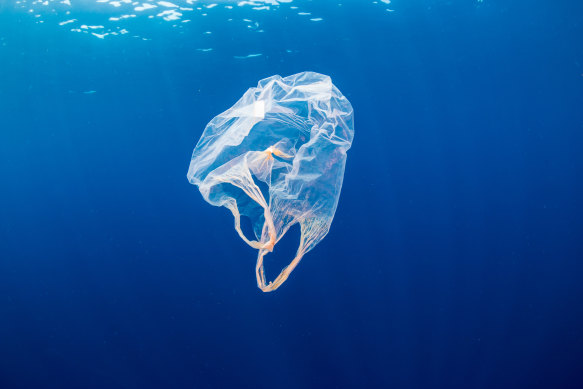
Take Glad’s recycled bin liners. In bold capitals, the label boasts they are “50% OCEAN PLASTIC”.
A little lower on the label, in a less prominent spot, “OCEAN PLASTIC” becomes “50% Ocean Bound Plastic*”.
The block capitals vanish. An asterisk appears.
In fine print, on the back of the roll, it says “OCEAN PLASTIC” and “Ocean Bound Plastic*” may never have been in the ocean at all.
In fact, it could have been plucked from the landscape in developing countries, up to 50 kilometres away from the sea.
“Made using 50 per cent ocean-bound recycled plastic that is collected from communities with no formal waste-management system within 50 kilometres of the shoreline,” the explanatory note reads.
It’s the kind of devil-in-the detail approach that has clean-up campaigner Heidi Tait hot under the collar, and imploring the consumer watchdog and politicians to act.
Tait founded the Tangaroa Blue Foundation, which works to prevent, remove and track marine debris in Australia. She recently told a government inquiry consumers are being taken for a ride, taking aim at a growing class of products that say they’re made from 50 to 100 per cent ocean or ocean-bound plastic.
“We’re allowing frameworks that have [overseas] waste pickers that might go and pick up rubbish 50 kilometres from the coast that may never have entered into the ocean,” she told the inquiry.
“We are importing that waste as a feedstock to be manufactured into [new] products and then we are claiming that somehow we’ve cleaned up the ocean and it’s going to have a benefit to our marine environment and to our wildlife.
“Those things are all extremely misleading.”
Couldn’t agree more with Ms Tait. This is very misleading to consumers.


Discussion · No Comments
There are no responses to "Consumer watchdog urged to step in on so-called ocean plastic – Australia". Comments are closed for this post.Oops! Sorry, comments are closed at this time. Please try again later.