


 How many people today grab a takeaway coffee cup from the local cafe to drink on the go? We don’t know, but the number must be enormous.. Most every one of the above have a plastic top that will last 100s of years. Some cafes still use plastic cups that last a similar time. Is 10 minutes of coffee worth 100s of years of trash?
These items can be seen littering our gutters and on our streets all over the place. If they were all cardboard, they would still be littered, but they would, at least, be gone in a short time.
They do not need to be made of plastic.
How many people today grab a takeaway coffee cup from the local cafe to drink on the go? We don’t know, but the number must be enormous.. Most every one of the above have a plastic top that will last 100s of years. Some cafes still use plastic cups that last a similar time. Is 10 minutes of coffee worth 100s of years of trash?
These items can be seen littering our gutters and on our streets all over the place. If they were all cardboard, they would still be littered, but they would, at least, be gone in a short time.
They do not need to be made of plastic.
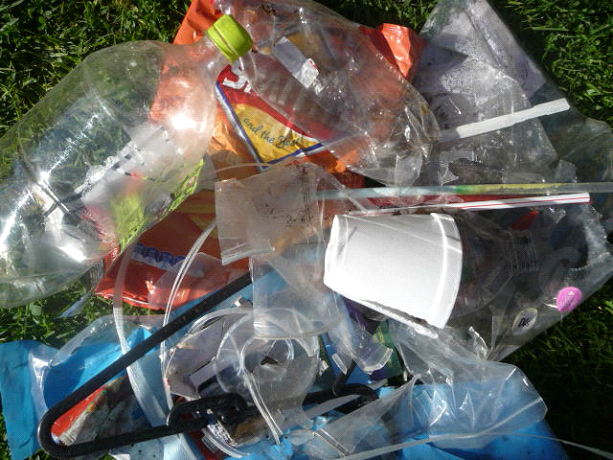 On the way home from the gym last week, a distance of about 1 km (1/2 mile), I counted the items of plastic litter on the curb as I walked. In that short distance I counted 63 pieces of plastic litter. Plastic drink bottles, bottle tops, candy wrappers, plastic film, polystyrene fragments etc. That seemed to be a lot to me. I guess it is a generational thing. Our parents would have been horrified to see that amount, whereas it seems to go unnoticed by our youth of today. In another 20 years how many pieces will there be on this stretch, -- 200? What will today’s youth think of that new amount then when they are older? Will their children be so readily accepting of a higher amount of litter?
 Ministers step in to regulate Australian packaging – Australia
Posted on November 17, 2023 by DrRossH in Plastic Recycling
Industry bodies have welcomed the Federal Government’s announcement of an ambitious new course for sustainable packaging in Australia.
At the Environment Ministers’ Meeting held in Adelaide last week, ministers agreed that the Federal Government would step up as the new regulator of packaging standards.
Ministers also agreed to:
- Setting minimum recycled content requirements.
- Prohibit the use of harmful chemicals in packaging.
- The endorsement of a national traceability framework for recycled materials.
- The agreement of a framework to improve co-ordination across governments on product stewardship.
The national packaging laws are aimed at providing regulatory certainty and consistency, and make businesses take responsibility for the 6.7 million tonnes of packaging they place on the Australian market.
It’s hoped strengthened regulation will drive investment, minimise waste and support circular economy outcomes, industries and jobs. Better packaging design makes it easier to reduce waste, and to reuse, recycle or compost packaging waste. Creating demand for recycled content will also increase recycling rates.
Chris Foley, Chief Executive Officer of the Australian Packaging Covenant Organisation (APCO), said regulatory certainty and consistency is fundamental to accelerating progress towards packaging sustainability targets.
“This announcement is deeply in line with what our members have been calling for and is a vital step forward,” Foley said.
“It’s not acceptable for any packaging to end up in landfill simply down to bad design choices and this important regulatory step will begin to end this practice once and for all.
“The decisive action taken by Environment Ministers on the introduction of minimum recycled content standards and a national traceability framework will not only drive the uptake of recycled content in packaging, but also create business confidence in the quality, safety and origin of the materials they are using.”
Foley said, the phase out of PFAS in packaging is a huge priority for APCO and applauded the announcement of the prohibition of harmful chemicals in future packaging.
Ministers also agreed to a framework that will accelerate product stewardship by better co-ordinating work across governments, including Western Australia leading on tyres and New South Wales leading on solvents.
Environment ministers agreed product stewardship schemes play a key role in holding producers accountable for managing their waste and driving circularity. However, these schemes are not open-ended, and where industry does not respond sufficiently government will regulate – as is happening with photovoltaic systems, electrical and electronic equipment, problematic single use plastics and packaging – including oil containers.
Others, such as the clothing textiles industry, are on notice for the need for action: if voluntary product stewardship doesn’t work, government will regulate.
Waste Management and Resource Recovery Association of Australia (WMRR) welcomed the announcements but Chief Executive Officer Gayle Sloan said real and enforceable timeframes on its implementation are missing.
“Australia is well off track to meeting its national targets for resource recovery. Every day, we are seeing evidence of the damage our current, linear economic system causes – including pollution, climate change, and biodiversity loss,” Sloan said.
“The resources dedicated to creating a voluntary traceability framework for those businesses that want to buy local and overseas recycled material, as opposed to all government’s actively preferencing and purchasing recycled material and products made from Australian recyclate, means yet again we are kicking the recycled can down the road!
“Australia needs urgent leadership to create markets for Australian recycled products and to remove the barriers and perception that they are inferior to virgin.”


Discussion · No Comments
There are no responses to "Ministers step in to regulate Australian packaging – Australia". Comments are closed for this post.Oops! Sorry, comments are closed at this time. Please try again later.