


 How many people today grab a takeaway coffee cup from the local cafe to drink on the go? We don’t know, but the number must be enormous.. Most every one of the above have a plastic top that will last 100s of years. Some cafes still use plastic cups that last a similar time. Is 10 minutes of coffee worth 100s of years of trash?
These items can be seen littering our gutters and on our streets all over the place. If they were all cardboard, they would still be littered, but they would, at least, be gone in a short time.
They do not need to be made of plastic.
How many people today grab a takeaway coffee cup from the local cafe to drink on the go? We don’t know, but the number must be enormous.. Most every one of the above have a plastic top that will last 100s of years. Some cafes still use plastic cups that last a similar time. Is 10 minutes of coffee worth 100s of years of trash?
These items can be seen littering our gutters and on our streets all over the place. If they were all cardboard, they would still be littered, but they would, at least, be gone in a short time.
They do not need to be made of plastic.
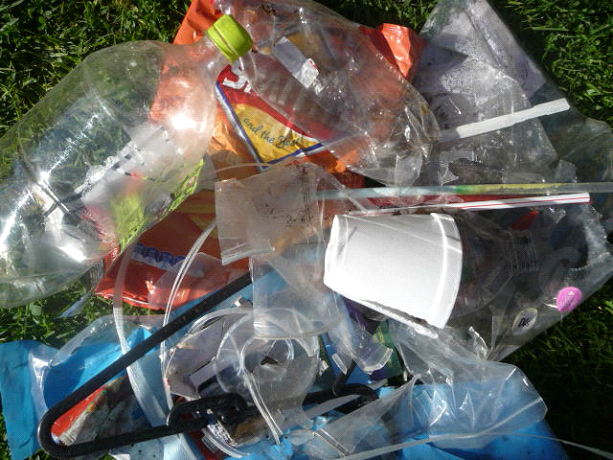 On the way home from the gym last week, a distance of about 1 km (1/2 mile), I counted the items of plastic litter on the curb as I walked. In that short distance I counted 63 pieces of plastic litter. Plastic drink bottles, bottle tops, candy wrappers, plastic film, polystyrene fragments etc. That seemed to be a lot to me. I guess it is a generational thing. Our parents would have been horrified to see that amount, whereas it seems to go unnoticed by our youth of today. In another 20 years how many pieces will there be on this stretch, -- 200? What will today’s youth think of that new amount then when they are older? Will their children be so readily accepting of a higher amount of litter?
 System Change to Circular Economy and its Impact on the Waste Management Sector | WMW
Posted on April 4, 2024 by DrRossH in Plastic RecyclingTo achieve a true circular economy a radical system change is essential. This also means that recycling cannot be the major tool to be relied upon,…
Source: System Change to Circular Economy and its Impact on the Waste Management Sector | WMW
The EU Green Deal brings about a transition period for the economic system. During this period, the waste management sector must continue to handle the waste of yesterday while at the same time organising the treatment of the waste of tomorrow. However, without any knowledge regarding the products of tomorrow, the waste management sector will keep the traditional system running and stick to their ideas to achieve higher recycling rates or better fulfil their clean-up operations. Engagement of the sector is both valuable and helpful and will still be needed for decades to come, but it has nothing to do with circular economy. This is because of the lack of any interaction or cooperation with producers. The PREVENT Waste Alliance created a mapping of digital solutions across the circular economy which showed that so called ‘digital actors in the circular economy’ from all over the world, who are trying to improve circular economy activities, are mainly active in the life cycle of products in the fields of collection and recycling while not a single actor deals with design at all. (Prevent Waste Alliance 2023) Taking this into account, it is to be expected that the waste management sector will not be the driver or even a main player of a future circular economy. This result of the above considerations is in stark contradiction to the political expectations as described above in connection with recycling. To achieve the goals of the Green Deal, politicians need to rethink. And producers, industry and trade must begin to play a much more active role.
There are so many good points in this article that it is well worth the read.


Discussion · No Comments
There are no responses to "System Change to Circular Economy and its Impact on the Waste Management Sector | WMW". Comments are closed for this post.Oops! Sorry, comments are closed at this time. Please try again later.