


 How many people today grab a takeaway coffee cup from the local cafe to drink on the go? We don’t know, but the number must be enormous.. Most every one of the above have a plastic top that will last 100s of years. Some cafes still use plastic cups that last a similar time. Is 10 minutes of coffee worth 100s of years of trash?
These items can be seen littering our gutters and on our streets all over the place. If they were all cardboard, they would still be littered, but they would, at least, be gone in a short time.
They do not need to be made of plastic.
How many people today grab a takeaway coffee cup from the local cafe to drink on the go? We don’t know, but the number must be enormous.. Most every one of the above have a plastic top that will last 100s of years. Some cafes still use plastic cups that last a similar time. Is 10 minutes of coffee worth 100s of years of trash?
These items can be seen littering our gutters and on our streets all over the place. If they were all cardboard, they would still be littered, but they would, at least, be gone in a short time.
They do not need to be made of plastic.
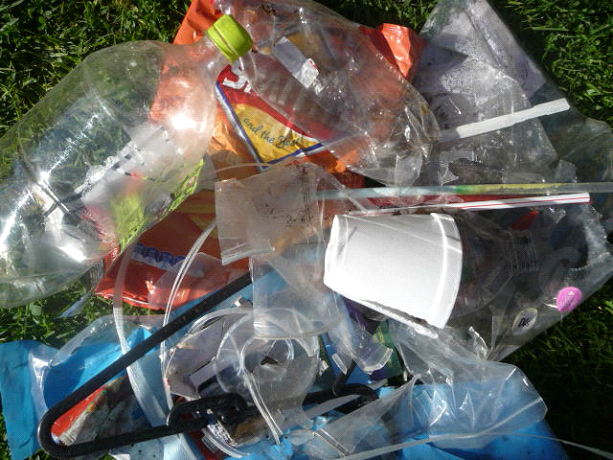 On the way home from the gym last week, a distance of about 1 km (1/2 mile), I counted the items of plastic litter on the curb as I walked. In that short distance I counted 63 pieces of plastic litter. Plastic drink bottles, bottle tops, candy wrappers, plastic film, polystyrene fragments etc. That seemed to be a lot to me. I guess it is a generational thing. Our parents would have been horrified to see that amount, whereas it seems to go unnoticed by our youth of today. In another 20 years how many pieces will there be on this stretch, -- 200? What will today’s youth think of that new amount then when they are older? Will their children be so readily accepting of a higher amount of litter?
 Bioplastics Demand to hit 6.2 m tons by 2017
Posted on December 13, 2013 by DrRossH in Plastic Waste NewsSustainable packaging demand fuels increase in bioplastic production.
The strongest growth likely will be in non-biodegradable bioplastics, such as PET and PE. Such material is attracting interest of CPGs such as Heinz and Coca-Cola, both of which pour their products into the recyclable, bio-based Plantbottle.
Lets put this in perspective. The plastics industry produces about 300 million tons of plastic a year. This will accumulate as plastic waste somewhere year after year to 600 million, 900 million, 1.2 billion tons only after 4 years. 6.2 m tons is a drop in the ocean.
Plus a very large plastics user, Coke is making a non-biodegradable bottle and saying we should be lauding their efforts to use a bioplastic source. They are going to continue to pollute our lands at large rates. They need to change their business model away from profits at any cost to the environment and step up to the plate to be a leader in Environmental management. There are steps they can take that will make very large progress to stopping their products from polluting our lands and oceans for the next 500 years. A deposit system on their plastic bottles will ensure a very high percentage of their bottles get actively returned not just littered. There are many examples of where this is in place in the world and working very efficiently. In Tanzania, there is a deposit on their glass bottles and they have over 99% recycling. In South Australia they have over 80% recycling where as a neighbouring state has approximately 25% recycling and a large littered plastic bottle problem. So ask your selves why would Coke spend millions of dollars (in Australia alone) fighting such a scheme?
Their corporate greed is plain wrong for our future generations.


Discussion · No Comments
There are no responses to "Bioplastics Demand to hit 6.2 m tons by 2017". Comments are closed for this post.Oops! Sorry, comments are closed at this time. Please try again later.