


 How many people today grab a takeaway coffee cup from the local cafe to drink on the go? We don’t know, but the number must be enormous.. Most every one of the above have a plastic top that will last 100s of years. Some cafes still use plastic cups that last a similar time. Is 10 minutes of coffee worth 100s of years of trash?
These items can be seen littering our gutters and on our streets all over the place. If they were all cardboard, they would still be littered, but they would, at least, be gone in a short time.
They do not need to be made of plastic.
How many people today grab a takeaway coffee cup from the local cafe to drink on the go? We don’t know, but the number must be enormous.. Most every one of the above have a plastic top that will last 100s of years. Some cafes still use plastic cups that last a similar time. Is 10 minutes of coffee worth 100s of years of trash?
These items can be seen littering our gutters and on our streets all over the place. If they were all cardboard, they would still be littered, but they would, at least, be gone in a short time.
They do not need to be made of plastic.
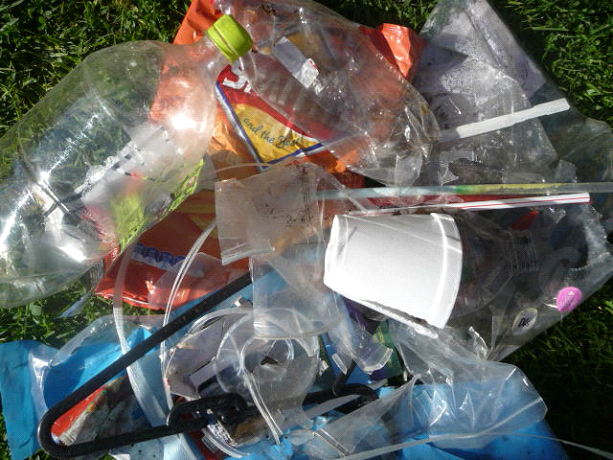 On the way home from the gym last week, a distance of about 1 km (1/2 mile), I counted the items of plastic litter on the curb as I walked. In that short distance I counted 63 pieces of plastic litter. Plastic drink bottles, bottle tops, candy wrappers, plastic film, polystyrene fragments etc. That seemed to be a lot to me. I guess it is a generational thing. Our parents would have been horrified to see that amount, whereas it seems to go unnoticed by our youth of today. In another 20 years how many pieces will there be on this stretch, -- 200? What will today’s youth think of that new amount then when they are older? Will their children be so readily accepting of a higher amount of litter?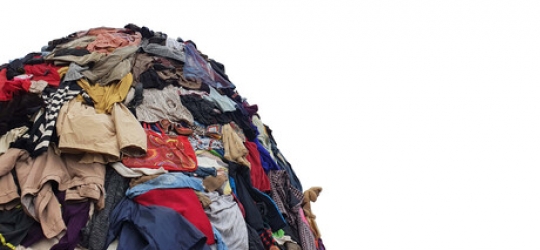
‘Plastic-eating’ enzymes to help combat textile waste – UK
Posted on February 28, 2023 by DrRossH in Plastic Recycling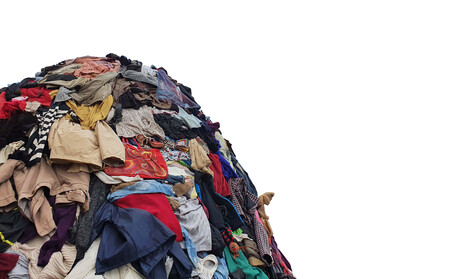
Approximately 60% of clothes worn today are made of synthetic textiles and they are often sent to landfill or incinerated at end of life.
Now, researchers at the University of Portsmouth’s Centre for Enzyme Innovation are using their enzyme technology (which has previously been used to recycle single-use plastics, including PET) to help combat polyester textiles in clothing waste.
Synthetic fabrics such as polyester are widely used for clothing due to their durability so the process of recycling them using enzymes will not be an easy one. The addition of dyes and other chemical treatments makes it even harder for these tough oil-based materials to be ‘digested’ in a natural process. Developing enzymes that can efficiently ‘eat’ polyester clothing, without energy-intensive pre-treatment, is the biggest challenge.
Professor Andy Pickford, Director of the Centre for Enzyme Innovation at the University of Portsmouth, said: “We will develop enzymes that can deconstruct the PET in waste textiles, tolerating the challenges that this feedstock poses, namely its toughness and the presence of dyes and additives.
“We will test the compatibility of our engineered enzymes with additives, dyes and solvents to select those enzymes that are best suited to polyester textile deconstruction. Then we will apply these enzymes to appropriately pretreated waste polyester textiles in laboratory-scale bioreactors to evaluate the potential and limitations of scaling up the technology.”
While it is possible to turn quality oil-based textiles into carpets and other products, current recycling methods are energy-intensive. Scientists hope that enzymes developed at the University of Portsmouth will help them create an environmentally friendly circular economy for plastic-based clothing.
Pickford said: “Our research will establish the feasibility of using enzymes to deconstruct the PET in waste textiles into a soup of simple building blocks for conversion back into new polyesters, thus reducing the need to produce virgin PET from fossil fuel-based chemicals. This will enable a circular polyester textiles economy and ultimately reduce our dependence on taking oil and gas out of the ground.
“We want a system that uses plastic in the same way we use glass or tin cans — infinitely recycled. The ultimate aim is to close the loop — however, this requires not only the technology but also the will to do so.”


Discussion · No Comments
There are no responses to "‘Plastic-eating’ enzymes to help combat textile waste – UK". Comments are closed for this post.Oops! Sorry, comments are closed at this time. Please try again later.