


 How many people today grab a takeaway coffee cup from the local cafe to drink on the go? We don’t know, but the number must be enormous.. Most every one of the above have a plastic top that will last 100s of years. Some cafes still use plastic cups that last a similar time. Is 10 minutes of coffee worth 100s of years of trash?
These items can be seen littering our gutters and on our streets all over the place. If they were all cardboard, they would still be littered, but they would, at least, be gone in a short time.
They do not need to be made of plastic.
How many people today grab a takeaway coffee cup from the local cafe to drink on the go? We don’t know, but the number must be enormous.. Most every one of the above have a plastic top that will last 100s of years. Some cafes still use plastic cups that last a similar time. Is 10 minutes of coffee worth 100s of years of trash?
These items can be seen littering our gutters and on our streets all over the place. If they were all cardboard, they would still be littered, but they would, at least, be gone in a short time.
They do not need to be made of plastic.
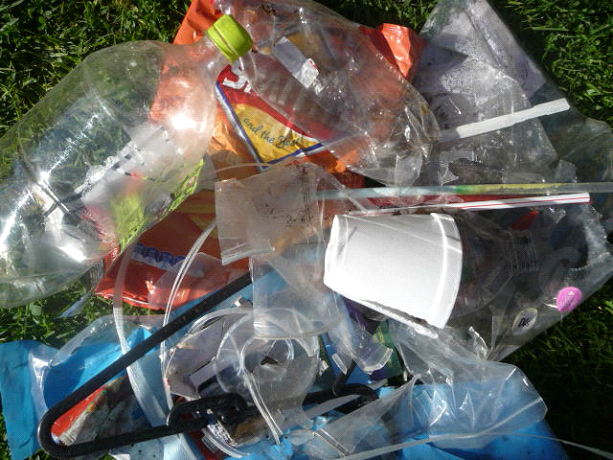 On the way home from the gym last week, a distance of about 1 km (1/2 mile), I counted the items of plastic litter on the curb as I walked. In that short distance I counted 63 pieces of plastic litter. Plastic drink bottles, bottle tops, candy wrappers, plastic film, polystyrene fragments etc. That seemed to be a lot to me. I guess it is a generational thing. Our parents would have been horrified to see that amount, whereas it seems to go unnoticed by our youth of today. In another 20 years how many pieces will there be on this stretch, -- 200? What will today’s youth think of that new amount then when they are older? Will their children be so readily accepting of a higher amount of litter?
Plibersek initiative seen as a ‘breakthrough’ – Australia
Posted on November 22, 2022 by DrRossH in Plastic Waste News
Australia’s commitment to a new global coalition that aims to end plastic pollution by 2040 is a breakthrough, according to the World Wide Fund for Nature-Australia.
Environment Minister Tanya Plibersek announced Australia will join the High Ambition Coalition to End Plastic Pollution, a group of more than 30 countries advocating for an ambitious global plastics treaty to cap plastic production and ultimately end single-use plastic.
While United Nations members agreed to start negotiations for a legally-binding treaty back in March, the scope of the agreement and what it will cover is still up for debate.
“Today the Australian Government has clearly signalled that it understands the urgency of the plastic problem and intends to push for a treaty with teeth to end plastic pollution,” said Kate Noble, WWF-Australia’s No Plastics in Nature Policy Manager. “We cannot allow the least ambitious countries to determine our future. About 11 million metric tonnes of plastic flows into the world’s oceans every year and if we don’t take action, this figure is projected to nearly triple by 2040.
Read more: Plibersek signs Australia up to High Ambition Coalition
“We need an ambitious and comprehensive treaty to tackle this environmental disaster, and we’re pleased to see Australia stepping up to help shape that process.”
The treaty has the potential to create global rules and obligations for the full life cycle of plastic, setting standards for reducing plastic production, consumption and pollution. The full content of the treaty is expected to be agreed by UN members by the end of 2024.
Noble said a recent global survey showed strong support for a treaty to end plastic pollution, with nearly nine in ten Australians saying a global agreement is important.
“That’s a huge mandate for decisive action,” she said. “We know Australians care deeply about protecting our precious environment and wildlife from plastic pollution, and about reducing the skyrocketing amounts of plastic we consume.
“Action on this starts in our homes and communities, but because plastic trade and pollution travel across international borders, we can only solve this problem by putting in place effective responses at all levels of government.”
Noble urged Plibersek and the Australian Government to match today’s global commitment with a clear and ambitious domestic reform agenda.
“Australia produces more single-use plastic waste per person than any other country except Singapore – we need to turn that around,” she said.
“If we’re going to regenerate Australia and build a more sustainable future, we need to shift to a circular economy where plastic is kept in use, and out of nature.”


Discussion · No Comments
There are no responses to "Plibersek initiative seen as a ‘breakthrough’ – Australia". Comments are closed for this post.Oops! Sorry, comments are closed at this time. Please try again later.