


 How many people today grab a takeaway coffee cup from the local cafe to drink on the go? We don’t know, but the number must be enormous.. Most every one of the above have a plastic top that will last 100s of years. Some cafes still use plastic cups that last a similar time. Is 10 minutes of coffee worth 100s of years of trash?
These items can be seen littering our gutters and on our streets all over the place. If they were all cardboard, they would still be littered, but they would, at least, be gone in a short time.
They do not need to be made of plastic.
How many people today grab a takeaway coffee cup from the local cafe to drink on the go? We don’t know, but the number must be enormous.. Most every one of the above have a plastic top that will last 100s of years. Some cafes still use plastic cups that last a similar time. Is 10 minutes of coffee worth 100s of years of trash?
These items can be seen littering our gutters and on our streets all over the place. If they were all cardboard, they would still be littered, but they would, at least, be gone in a short time.
They do not need to be made of plastic.
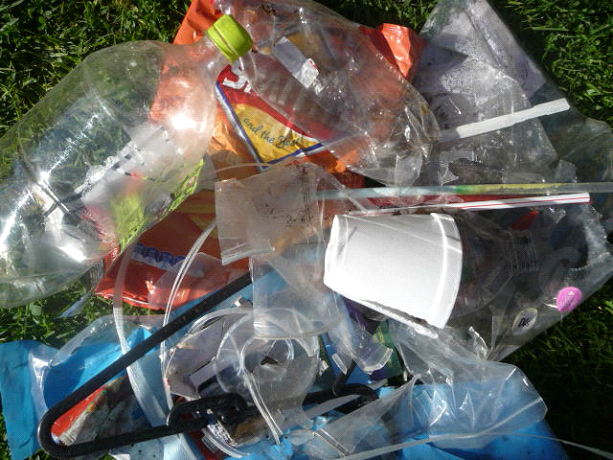 On the way home from the gym last week, a distance of about 1 km (1/2 mile), I counted the items of plastic litter on the curb as I walked. In that short distance I counted 63 pieces of plastic litter. Plastic drink bottles, bottle tops, candy wrappers, plastic film, polystyrene fragments etc. That seemed to be a lot to me. I guess it is a generational thing. Our parents would have been horrified to see that amount, whereas it seems to go unnoticed by our youth of today. In another 20 years how many pieces will there be on this stretch, -- 200? What will today’s youth think of that new amount then when they are older? Will their children be so readily accepting of a higher amount of litter?
 Top Ten Reasons The Bottle Bill Is Bad For Massachusetts
Posted on June 13, 2012 by DrRossH in Plastic Limiting RegulationsTop Ten Reasons The Bottle Bill Is Bad For Massachusetts | Solid Waste & Recycling Magazine.
Let’s see what is being said in here. About 20 mil will be generated from unredeemed deposits. Typically that is about 20% or less of the containers that are un redeemed. Which means that over 80% are typically redeemed. What is the container recycling rate in MA now, we do not know but would estimate approx less than 20%. That means all those cans and bottles are going to the landfills or ending up in the Atlantic. That is not only bad for the marine life, but is a huge resource loss for the state. Why bury valuable resources in the ground? These companies at present find it easier and lower cost to just buy new product all the time and seem to be happy to leave their problems to others in the years to come. That is irresponsible.
How can grocery prices go up if 80% of the containers are being redeemed. Those that redeem their cans would have no consequence on the grocery bill. For those 20% odd of people who care not to redeem the cans, they are not the poorer parts of society anyway. If fact if some of these more fortunate people do not care to get their 10 cents back, then someone who is less fortunate will go retrieve it and get a few dollars per day for their efforts, hence the bottle bill if it passes is doing the less fortunate people a big favour.
The weak excuses that business who care more for their own profits than they do for their customers or their environment, come up with is like listening to a stuck record. Loss of job, loss of job, loss of jobs. Actual evidence reported in other localities that do have a container deposit in place are generating jobs as the infrastructure is put in place to move the recycling of containers back to the remanufacturing plant. That is a win-win situation. Jobs creation, far less littering, less pollution in the ocean, income for less fortunate people and community organisations. Do the organisations mentioned in this article care nothing about any of this? The title of this article should be Ten organisations who care less about Massachusetts.


Discussion · No Comments
There are no responses to "Top Ten Reasons The Bottle Bill Is Bad For Massachusetts". Comments are closed for this post.Oops! Sorry, comments are closed at this time. Please try again later.