


 How many people today grab a takeaway coffee cup from the local cafe to drink on the go? We don’t know, but the number must be enormous.. Most every one of the above have a plastic top that will last 100s of years. Some cafes still use plastic cups that last a similar time. Is 10 minutes of coffee worth 100s of years of trash?
These items can be seen littering our gutters and on our streets all over the place. If they were all cardboard, they would still be littered, but they would, at least, be gone in a short time.
They do not need to be made of plastic.
How many people today grab a takeaway coffee cup from the local cafe to drink on the go? We don’t know, but the number must be enormous.. Most every one of the above have a plastic top that will last 100s of years. Some cafes still use plastic cups that last a similar time. Is 10 minutes of coffee worth 100s of years of trash?
These items can be seen littering our gutters and on our streets all over the place. If they were all cardboard, they would still be littered, but they would, at least, be gone in a short time.
They do not need to be made of plastic.
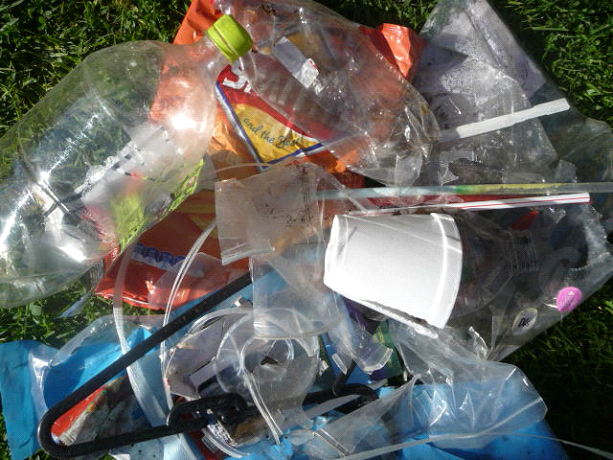 On the way home from the gym last week, a distance of about 1 km (1/2 mile), I counted the items of plastic litter on the curb as I walked. In that short distance I counted 63 pieces of plastic litter. Plastic drink bottles, bottle tops, candy wrappers, plastic film, polystyrene fragments etc. That seemed to be a lot to me. I guess it is a generational thing. Our parents would have been horrified to see that amount, whereas it seems to go unnoticed by our youth of today. In another 20 years how many pieces will there be on this stretch, -- 200? What will today’s youth think of that new amount then when they are older? Will their children be so readily accepting of a higher amount of litter?
 Transforming soft plastics recycling – Australia
Posted on April 21, 2023 by DrRossH in Plastic RecyclingSourcehttps://www.packagingnews.com.au/sustainability/transforming-soft-plastics-recycling
The recent events that have seriously disrupted soft plastic recycling in Australia highlight the country’s vulnerable recycling ecosystem.
The government’s ambitious targets, including a target of 70 per cent of plastic packaging being recycled or composted by 2025, mirrors Australian consumers’ positive attitude towards recycling. According to the 2022 Australasian Recycling Label Consumer Insights Report, 87 per cent of Australians believe that recycling at home is the right thing to do.
Turning this into a reality, however, is going to require the entire supply chain to come together, and there are ample reasons to do so.
According to Plastics Europe’s latest report, in 2021, 90 per cent of the world’s plastics production was fossil-based. Post-consumer recycled plastics and bio-based/bio-attributed plastics respectively accounted for 8.3 per cent and 1.5 per cent of the world’s plastics production.
By 2030, the energy embodied in items that get thrown away will represent up to 15 per cent of our current CO2 emissions. Between now and then, carbon emissions associated with the production of what eventually becomes municipal waste will grow by up to two-thirds, undermining efforts in other areas of the economy that are getting the most attention, such as energy and transport systems.
The sheer volume of waste and its mismanagement pose the twin threats of direct pollution and loss of resources, poised to increase as populations continue to grow.
What can we say? The reality of recycling plastics is still a long ways away. Much more regulation is required to turn this path around. Once we are there the costs will drop again, but we have to get there first.


Discussion · No Comments
There are no responses to "Transforming soft plastics recycling – Australia". Comments are closed for this post.Oops! Sorry, comments are closed at this time. Please try again later.