


 How many people today grab a takeaway coffee cup from the local cafe to drink on the go? We don’t know, but the number must be enormous.. Most every one of the above have a plastic top that will last 100s of years. Some cafes still use plastic cups that last a similar time. Is 10 minutes of coffee worth 100s of years of trash?
These items can be seen littering our gutters and on our streets all over the place. If they were all cardboard, they would still be littered, but they would, at least, be gone in a short time.
They do not need to be made of plastic.
How many people today grab a takeaway coffee cup from the local cafe to drink on the go? We don’t know, but the number must be enormous.. Most every one of the above have a plastic top that will last 100s of years. Some cafes still use plastic cups that last a similar time. Is 10 minutes of coffee worth 100s of years of trash?
These items can be seen littering our gutters and on our streets all over the place. If they were all cardboard, they would still be littered, but they would, at least, be gone in a short time.
They do not need to be made of plastic.
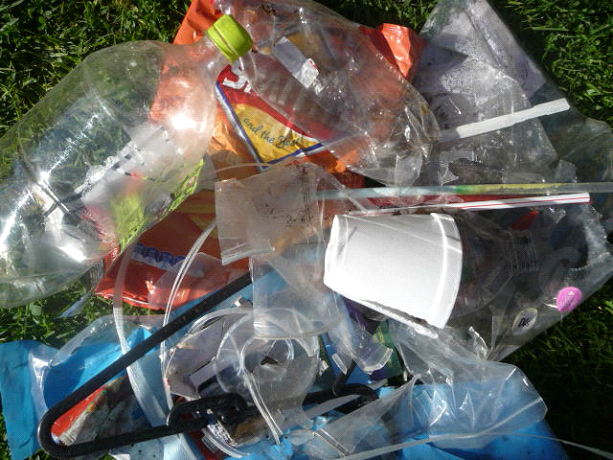 On the way home from the gym last week, a distance of about 1 km (1/2 mile), I counted the items of plastic litter on the curb as I walked. In that short distance I counted 63 pieces of plastic litter. Plastic drink bottles, bottle tops, candy wrappers, plastic film, polystyrene fragments etc. That seemed to be a lot to me. I guess it is a generational thing. Our parents would have been horrified to see that amount, whereas it seems to go unnoticed by our youth of today. In another 20 years how many pieces will there be on this stretch, -- 200? What will today’s youth think of that new amount then when they are older? Will their children be so readily accepting of a higher amount of litter?
HOW BAD ARE PLASTICS, REALLY?
Posted on January 12, 2022 by DrRossH in Plastic Waste News
Plastics are one of the mojour causes of climate change.
Emissions stem from upstream fossil-fuel production and processing. But there are concerns, too, about the potential for even more emissions at the other end of the life cycle, should states green-light industry proposals to expand such carbon-intensive waste-management technologies as incineration, refuse-derived fuels, and molecular, chemical, and so-called advanced recycling. These unproven technologies use high heat and other methods to convert waste into feedstocks for making more plastics. As of now, such technologies shift “the landfill from the ground to the sky,” says Yobel Novian Putra, who works on Asia Pacific climate and energy policy for the Global Alliance for Incinerator Alternatives, which in turn has implications for both air quality and climate.
But petrochemical production itself is also energy-intensive—among the top-two energy users in the manufacturing sector. Even if the industry were to convert to low-carbon energy sources (or to adopt problematic carbon-capture-and-storage, or CCS, technologies), plastics would remain a significant emitter of climate-relevant gases, according to analysts from the Center for International Environmental Law (CIEL).
Yet to date, climate policy has not focused on manufacturing or plastics. And too often plastics’ proliferation can seem of secondary importance as climate disasters accelerate. But plastics and climate aren’t separate issues. They are structurally linked problems, and also mutually compounding, with plastics’ facilities spewing climate-relevant emissions and extreme weather further dispersing plastic into the environment. Research is under way to study their interaction—the way, say, thermal stress affects how species respond to toxic exposures. But they have the same root. “Plastic is carbon,” fossil fuels in another form, CIEL’s president, Carroll Muffett, told me. Or, as the geographer Deirdre McKay phrases it, plastic is climate change, just in its solid state.
Reduce is the only solution, but getting consumers on board will be a long slow road unfortunately. The plastics industyr will be fighting any change in their production all along the way.


Discussion · No Comments
There are no responses to "HOW BAD ARE PLASTICS, REALLY?". Comments are closed for this post.Oops! Sorry, comments are closed at this time. Please try again later.