


 How many people today grab a takeaway coffee cup from the local cafe to drink on the go? We don’t know, but the number must be enormous.. Most every one of the above have a plastic top that will last 100s of years. Some cafes still use plastic cups that last a similar time. Is 10 minutes of coffee worth 100s of years of trash?
These items can be seen littering our gutters and on our streets all over the place. If they were all cardboard, they would still be littered, but they would, at least, be gone in a short time.
They do not need to be made of plastic.
How many people today grab a takeaway coffee cup from the local cafe to drink on the go? We don’t know, but the number must be enormous.. Most every one of the above have a plastic top that will last 100s of years. Some cafes still use plastic cups that last a similar time. Is 10 minutes of coffee worth 100s of years of trash?
These items can be seen littering our gutters and on our streets all over the place. If they were all cardboard, they would still be littered, but they would, at least, be gone in a short time.
They do not need to be made of plastic.
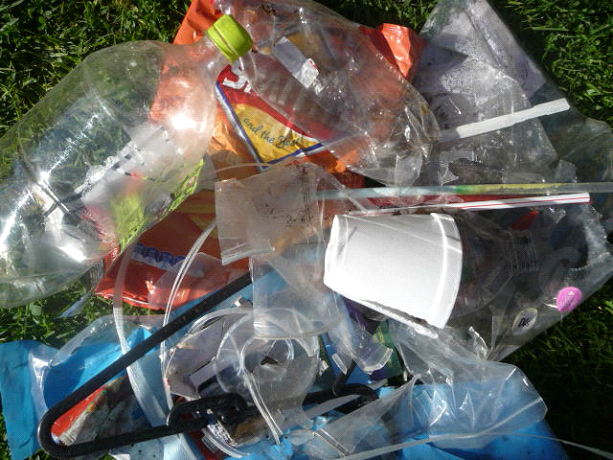 On the way home from the gym last week, a distance of about 1 km (1/2 mile), I counted the items of plastic litter on the curb as I walked. In that short distance I counted 63 pieces of plastic litter. Plastic drink bottles, bottle tops, candy wrappers, plastic film, polystyrene fragments etc. That seemed to be a lot to me. I guess it is a generational thing. Our parents would have been horrified to see that amount, whereas it seems to go unnoticed by our youth of today. In another 20 years how many pieces will there be on this stretch, -- 200? What will today’s youth think of that new amount then when they are older? Will their children be so readily accepting of a higher amount of litter?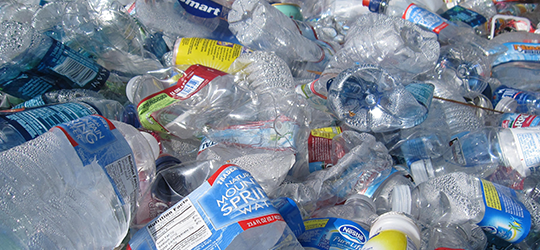
SMX completes PCR plastics traceability trial – Australia
Posted on April 7, 2022 by DrRossH in Plastic Waste News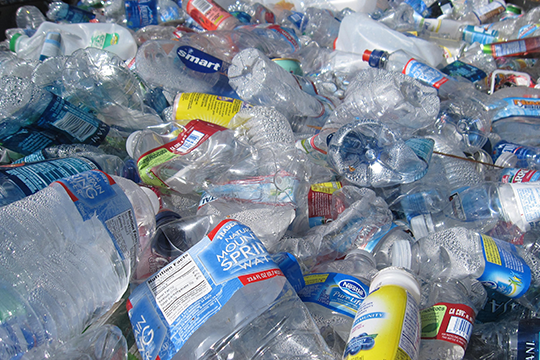
ASX-listed company Security Matters (SMX) has successfully completed a trial for marking recycled plastics in a fully commercial industrial facility, which studied the impact of different feeding methods on final post-consumer recycled content (PCR).
The successful trial, which comes as the UK and other countries have or will soon implement their recycled Plastic Packaging Tax Legislations, provides plastic manufacturers and importing companies with a proof of concept, enabling them to accurately identify and audit, via an automated transparent reporting system, the polymer type, number of loops and the amount of recycled content, despite the size and colour of the plastic.
As a result, these companies will be well positioned to promote their operations as being sustainable and environmentally friendly. Combined with SMX’s ability to digitally certify the materials, clients will have the ability to avoid human/manual-paper auditing and use technology/automated auditing, thus reducing the potential for human errors and providing increased cost savings.
The compounding master batch and extrusion processes of these trials were performed on a pilot scale in a fully commercial and industrial facility. Tracked PCR pellets were sent to a bottle manufacturer to produce different bottle configurations to validate the accuracy and precision of PCR in the bottles.
The SMX team successfully demonstrated the ability to manage the process remotely, ensuring the viability of industrial scale adoption. The marked PCR and bottles were scanned using an SMX handheld portable reader. All readings were digitally recorded on a digital platform for traceability. The methodology utilised approximately 50 different bottles, produced with different inclusion levels, layer configurations and pigment choices, which were produced in the three loops:
Following these trials, it was found that:
• In all cases the quantification of the PCR was successful
• The layers configuration didn’t affect the accuracy of the PCR reading
• Addition of pigments didn’t affect detectability
• Regrinding material had no effect on detectability
• No sensitivity to thickness variation


Discussion · No Comments
There are no responses to "SMX completes PCR plastics traceability trial – Australia". Comments are closed for this post.Oops! Sorry, comments are closed at this time. Please try again later.